Hotline: +84 981638588
Email: info@lochoangan.com No. 105 Hoang Van Thai Street, Phuong Liet Ward, Ha Noi, Vietnam
Electricity is a significant operating expense for many factories, especially those using high-capacity machinery, production lines, and equipment during the day. As electricity prices and production demands change, businesses need more proactive ways to manage their energy supply and control long-term costs.
Installing rooftop solar power systems allows factories to use their existing roof space to generate electricity for on-site production. However, system performance and financial returns depend on electricity consumption, roof area, building conditions, equipment, and the investment model. Understanding the benefits of solar power for manufacturing businesses helps investors evaluate projects more realistically before implementation.
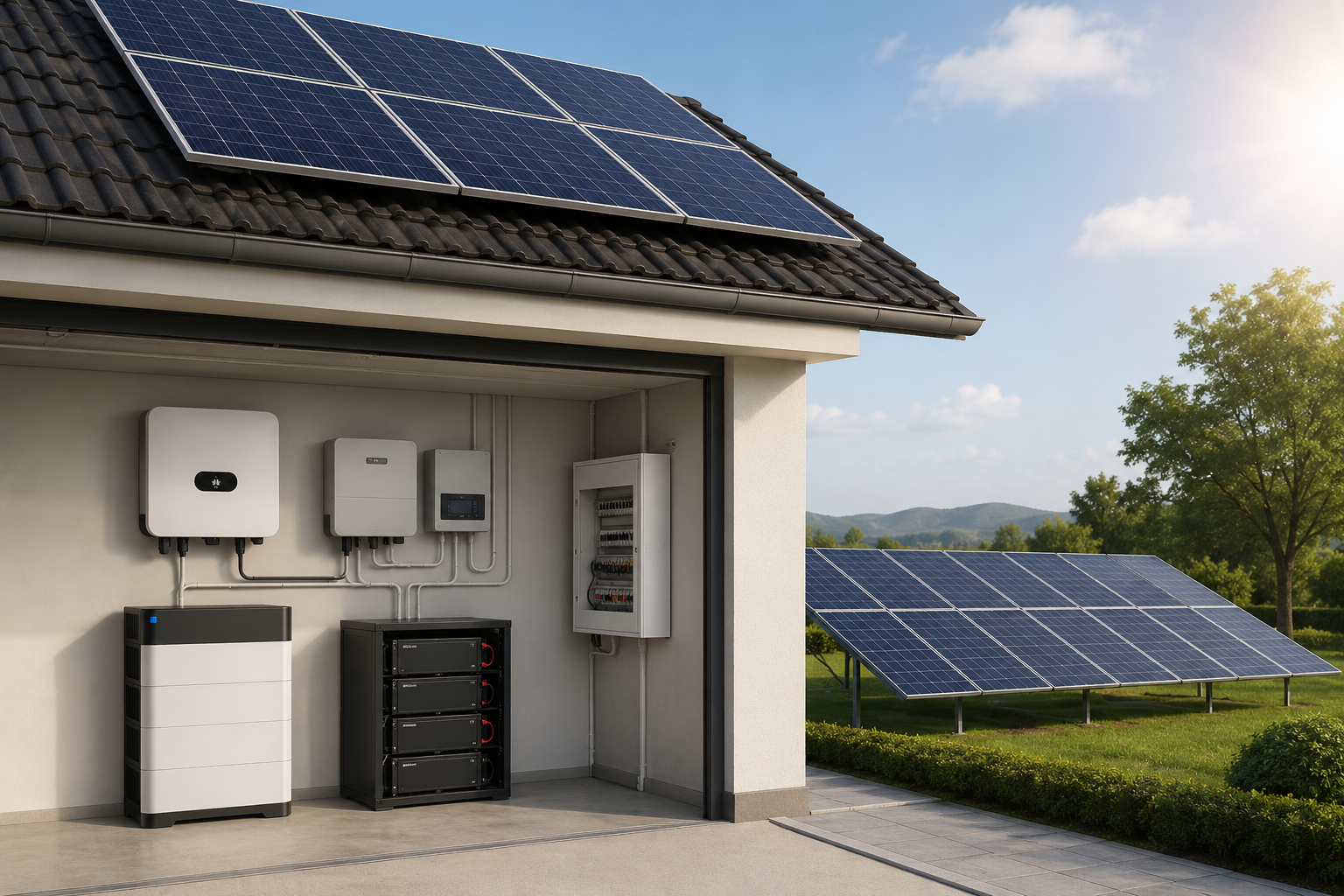
Solar power systems for manufacturing businesses are typically photovoltaic systems installed on factory roofs, warehouses, parking canopies, or suitable land. Solar panels capture sunlight and generate direct current (DC), which an inverter converts into alternating current (AC) to supply machinery, equipment, and other factory loads.
A basic system includes:
Solar panels
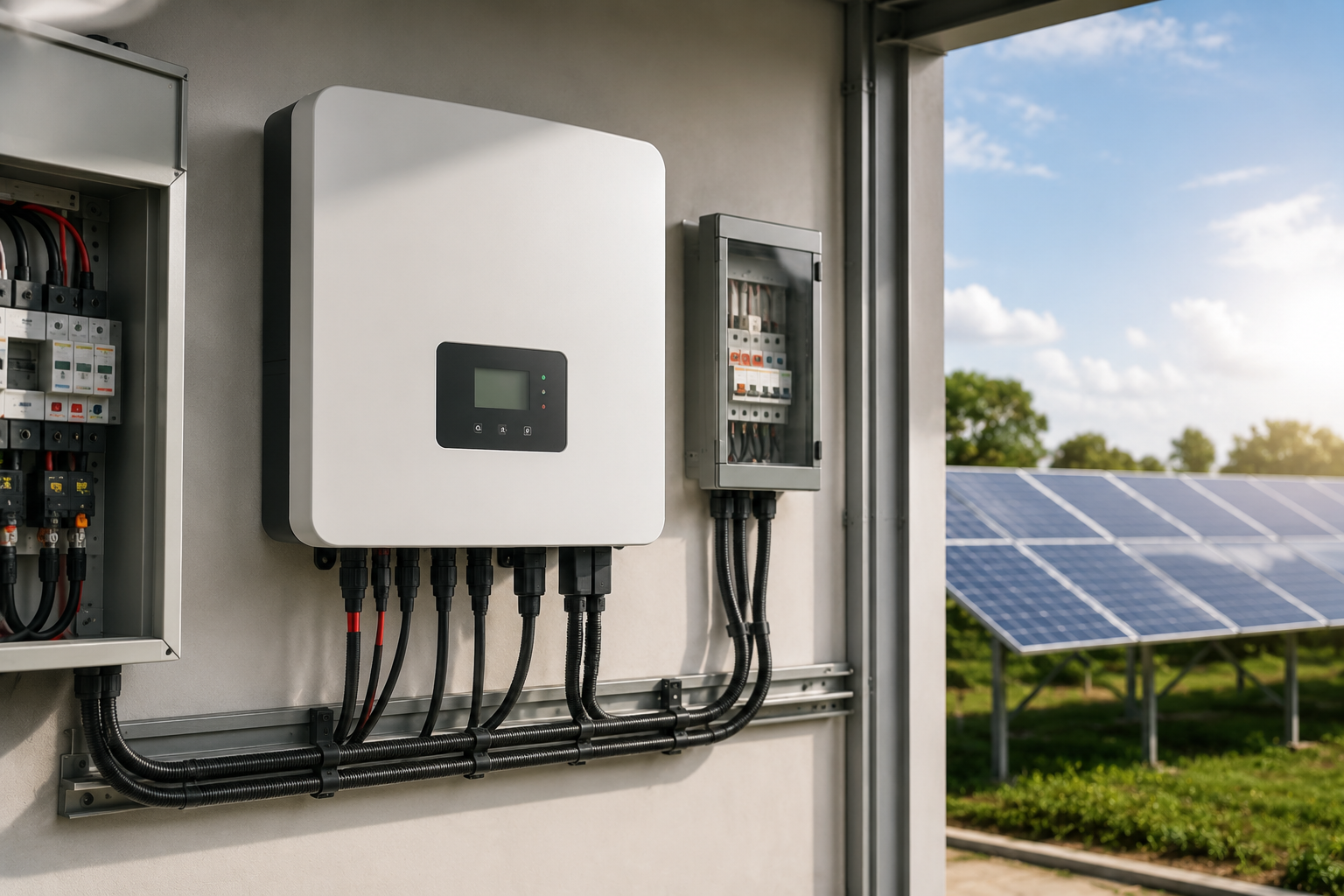
Grid-tied or hybrid inverters
Solar panel mounting structures
DC and AC cables
Electrical cabinets and protective devices
Grounding and lightning protection systems
Metering and monitoring equipment
Battery storage, if required
Software for monitoring electricity generation
Under a self-consumption model, solar electricity is prioritized for use within the factory. When solar generation is insufficient to meet demand, the business continues drawing the remaining electricity from the grid.
One of the most noticeable benefits of solar power is reducing the amount of electricity a business needs to purchase during sunny hours. These are often the same hours when factories operate machinery, lighting, ventilation, cooling systems, and auxiliary equipment at high capacity.
Actual savings depend on:
Solar power system capacity
Electricity generation
Daytime electricity consumption
Applicable electricity tariffs
The proportion of solar electricity used directly
Solar irradiation conditions at the installation site
Equipment efficiency
Operating and maintenance conditions
Businesses with relatively stable daytime load profiles are generally well positioned to benefit from solar power generation.
Most solar power investment costs occur during the initial stage, while a properly designed and maintained system can operate for many years. This gives businesses a stronger basis for forecasting part of their long-term energy expenses.
Solar power does not eliminate a business's dependence on the electricity grid entirely. However, it can reduce the impact of electricity price fluctuations on the portion of energy generated and consumed on-site.
More predictable energy costs can help businesses:
Prepare operating budgets
Calculate product costs
Develop long-term financial plans
Evaluate the performance of individual factories
Control production costs across reporting periods
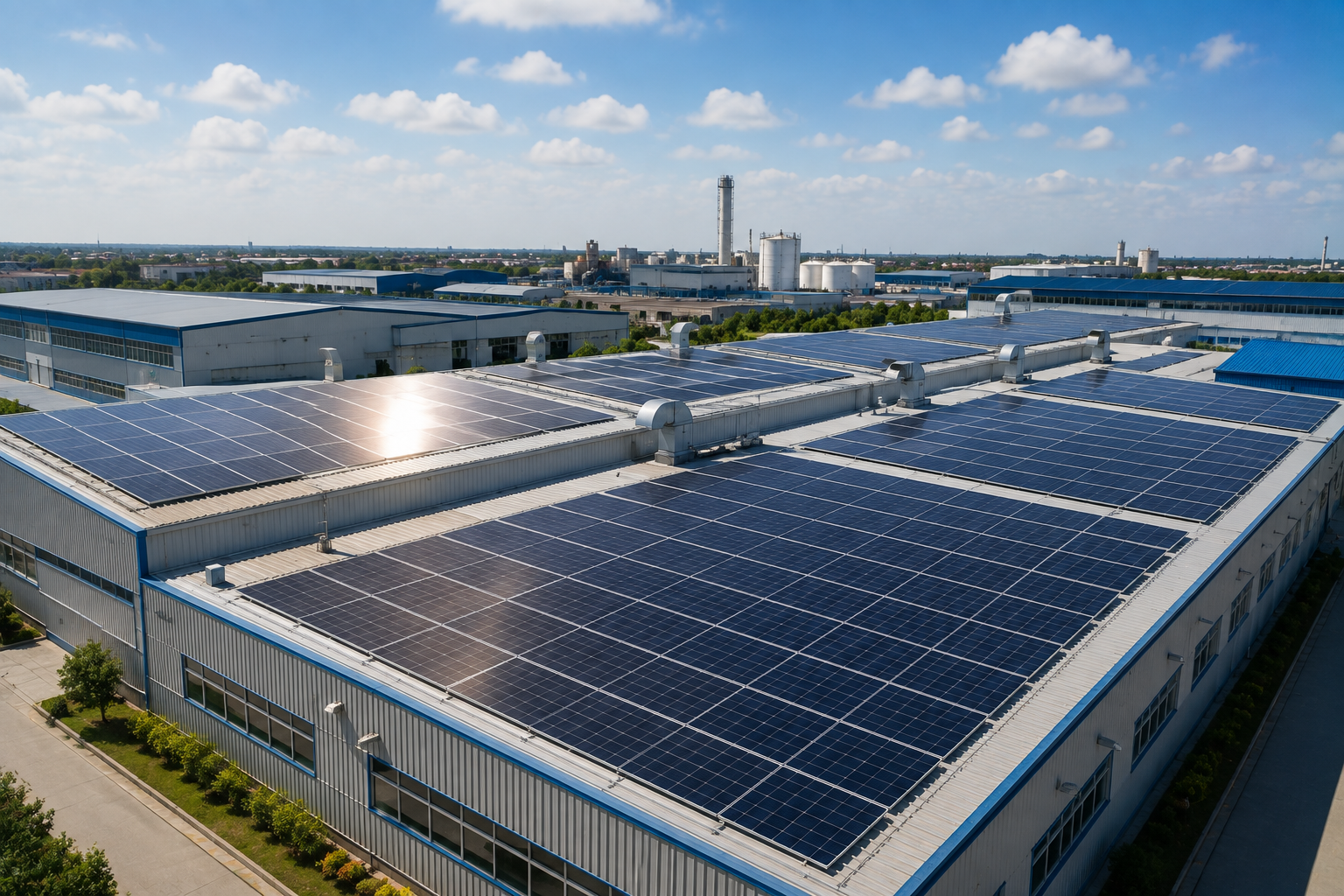
Many factories have large roof areas that are not being used for energy generation. Installing solar panels turns this existing space into an electricity-generating asset without necessarily requiring additional land.
This solution is particularly suitable for:
Manufacturing plants
Warehouses and distribution centers
Processing facilities
Industrial parks
Covered parking areas
Commercial buildings with high daytime electricity demand
Before installation, the roof must be assessed for structural integrity, remaining service life, load-bearing capacity, orientation, slope, waterproofing condition, and the space required for maintenance.
Solar power generates most of its electricity during the day. This is also when many manufacturing businesses operate production lines and consume substantial amounts of electricity.
The alignment between generation hours and consumption hours helps businesses increase their self-consumption rate. Solar electricity can supply:
Production lines
Air compressors
Pumping systems
Cooling equipment
Ventilation systems
Factory lighting
Office equipment
Warehouses and auxiliary areas
If a factory operates primarily at night, the business should carefully assess its load profile and consider energy storage where appropriate.
Using solar power increases the proportion of renewable energy in a business's electricity consumption. It can support emissions-reduction plans and improve energy efficiency.
Businesses can use solar generation data to support:
Tracking renewable electricity consumption
Preparing environmental reports
Developing emissions-reduction plans
Evaluating energy performance
Providing data to customers or business partners
Supporting sustainability objectives
Converting solar electricity generation into estimated emissions reductions requires appropriate emission factors and calculation methods. Businesses should not make environmental claims without supporting data or a verifiable basis.
Many customers, multinational corporations, and international business partners are increasingly interested in the energy sources used in manufacturing. Some supply chains require suppliers to report energy consumption, emissions, or plans to transition to cleaner energy.
Solar power systems can help businesses:
Increase renewable energy consumption
Access time-based electricity generation data
Support reporting to business partners
Demonstrate environmental improvement plans
Improve their ability to meet supply chain requirements
Strengthen their position in tenders or customer acquisition
However, installing solar panels does not automatically mean a business meets every environmental standard. Each certification or partner requirement has its own scope and assessment methodology.
Factories that use renewable energy can create a positive impression among customers, investors, business partners, and employees. This value is more credible when businesses provide actual performance data rather than relying solely on general promotional statements.
Businesses may disclose relevant information such as:
Installed system capacity
Annual electricity generation
The proportion of solar electricity consumed on-site
Reductions in electricity purchased from the grid
Energy-saving plans
Emissions inventory and reduction results
Transparent information provides a stronger basis for communications and helps prevent exaggerated environmental claims.
Modern solar power systems commonly include monitoring platforms. Operators can track electricity generation, power output, inverter status, and alert history through a computer or mobile device.
Monitoring data helps businesses:
Track daily, monthly, and annual generation
Compare output across different areas
Detect abnormal inverter operation
Identify when system output decreases
Compare solar generation with electricity demand
Prepare investment performance reports
Schedule cleaning and maintenance proactively
When integrated with a factory's energy management system, solar monitoring data can also help businesses better understand their load profiles and electricity consumption patterns.
Battery storage allows part of the solar electricity generated to be stored for use at a later time. Depending on the configuration, a storage system can supply ed priority loads or help optimize energy use within the factory.
This solution may be worth considering when a business:
Needs electricity outside daylight hours
Wants to increase solar self-consumption
Has loads that must remain powered during supply interruptions
Needs to manage demand at specific times
Operates in an area with an unstable electricity grid
Not every factory needs battery storage. Investment costs, capacity, cycle life, operating conditions, and fire safety requirements should be assessed before making a decision.
A solar power system designed with appropriate capacity, suitable equipment, and stable operating conditions can become an integral part of a factory's energy infrastructure.
Beyond electricity generation, the project can provide:
Energy management data
Centralized monitoring
A foundation for expanding renewable energy capacity
A basis for implementing energy storage
Experience in energy project management
Opportunities to improve long-term operating efficiency
These benefits can be sustained only when the business has an appropriate plan for inspection, cleaning, maintenance, and equipment replacement.
A conventional grid-tied solar power system does not necessarily continue supplying electricity when the grid fails. The inverter generally must stop operating to protect the grid and personnel working on electrical lines.
If a business needs to keep ed loads powered during an outage, the system must be designed with a suitable configuration, which may include:
A hybrid inverter
Battery storage
A transfer switch or source-transfer cabinet
An energy management controller
A backup generator
Dedicated circuits for priority loads
Businesses should clearly define their objectives during the design stage: reducing electricity costs, providing backup power, or achieving both. Each objective leads to different technical solutions and investment costs.
Solar power is generally more suitable for businesses with the following characteristics:
High daytime electricity consumption
A sufficiently large factory roof
A roof with a long remaining service life
A roof structure that meets load-bearing requirements
Limited shading
Clear electricity consumption data
Plans to remain at the site for an extended period
Medium- to long-term investment plans
A technical team able to support system operation
A desire to increase renewable energy consumption
Conversely, businesses should assess projects carefully if their roofs are deteriorating, factory renovations are planned, daytime electricity demand is low, or the remaining property lease is short.
A project should not be evaluated solely by installed capacity or the initial quotation. Financial analysis must be based on the factory's actual operating data.
The assessment provider should collect electricity bills, power demand figures, and time-based load data. The objective is to determine how much solar electricity the factory can consume directly.
Factors to inspect include:
Available area for solar panels
Roof orientation and slope
Structural load-bearing capacity
Remaining roof service life
Locations of skylights and gutters
Shading from trees, water tanks, or nearby structures
Access routes for operation and maintenance
Inverter and electrical cabinet locations
Electrical connection distances
Expected generation should be calculated based on geographic location, installation orientation, system losses, equipment specifications, and environmental conditions. A single generic generation estimate should not be applied to every factory.
Solar electricity generated but not consumed when available can change the project's financial performance. The self-consumption rate is therefore an important factor in determining the appropriate system capacity.
In addition to equipment and installation costs, businesses should account for:
Survey and design costs
Roof reinforcement costs, if required
Operating and cleaning costs
Inspection and maintenance costs
Insurance costs
Potential inverter repair or replacement
Equipment replacement over time
Roof maintenance during the system's service life
The payback period depends on the initial investment, actual electricity generation, electricity prices, self-consumption rate, operating costs, and performance degradation. Businesses should ask their consultants to clearly state the assumptions used in the financial analysis.
A roof may accommodate many solar panels, but the factory's electricity demand may not be sufficient to use all the electricity generated. System capacity should be determined by considering both available roof space and electricity consumption.
A solar installation adds load to the roof and must withstand wind, rain, and temperature changes. Structural assessments help determine suitable mounting methods, connections, and load distribution.
If the roof is deteriorating or will soon need replacement, the business should address these issues before installing solar panels. Removing the system later to repair the roof may increase costs and disrupt operations.
A low quotation does not necessarily indicate a high-quality project. Businesses should evaluate system design, equipment origin, installation methods, protective systems, warranty terms, and post-installation support.
The design should address cable routing, connectors, electrical cabinets, grounding, lightning protection, safety clearances, and access routes. Equipment must be suitable for the factory's operating environment.
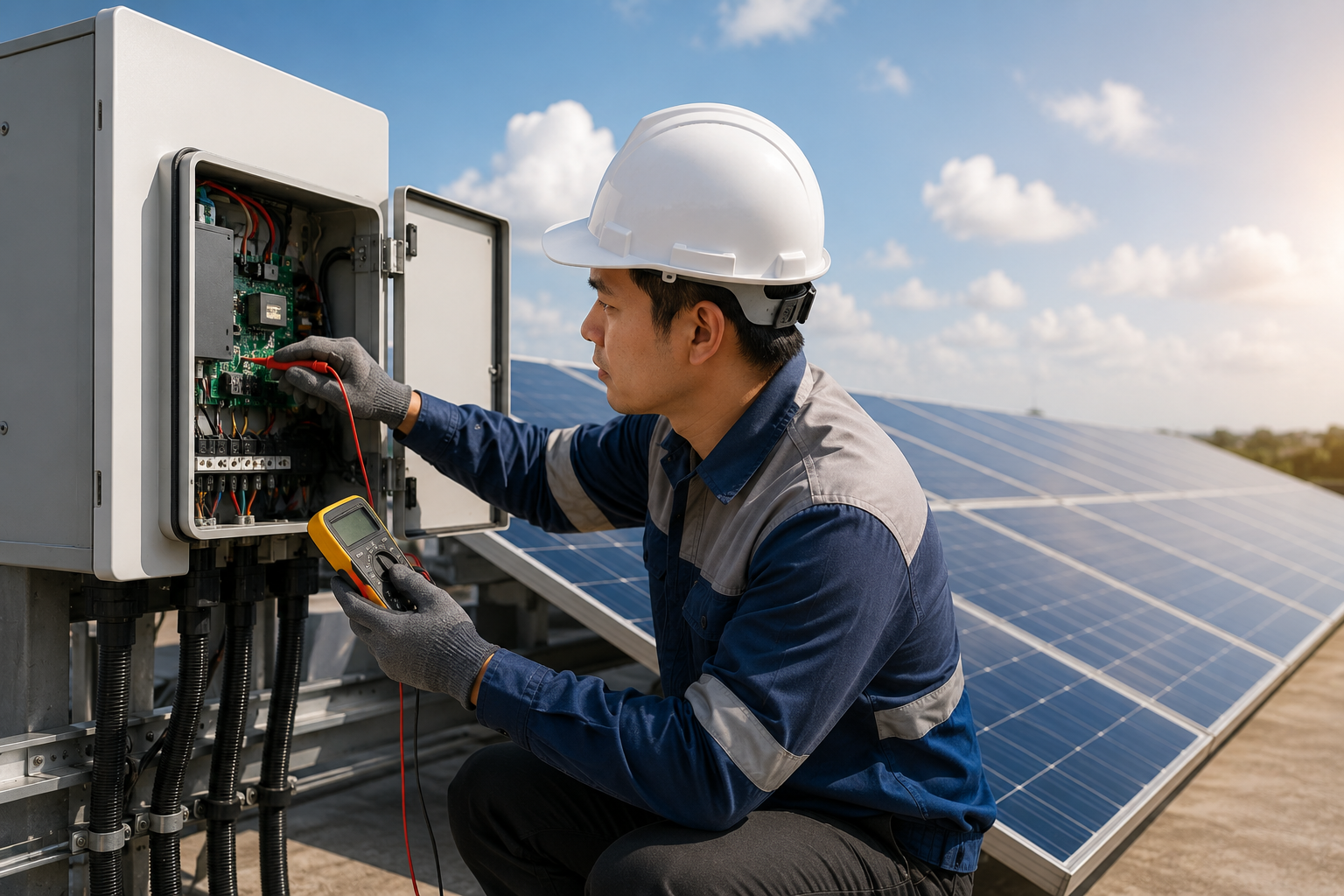
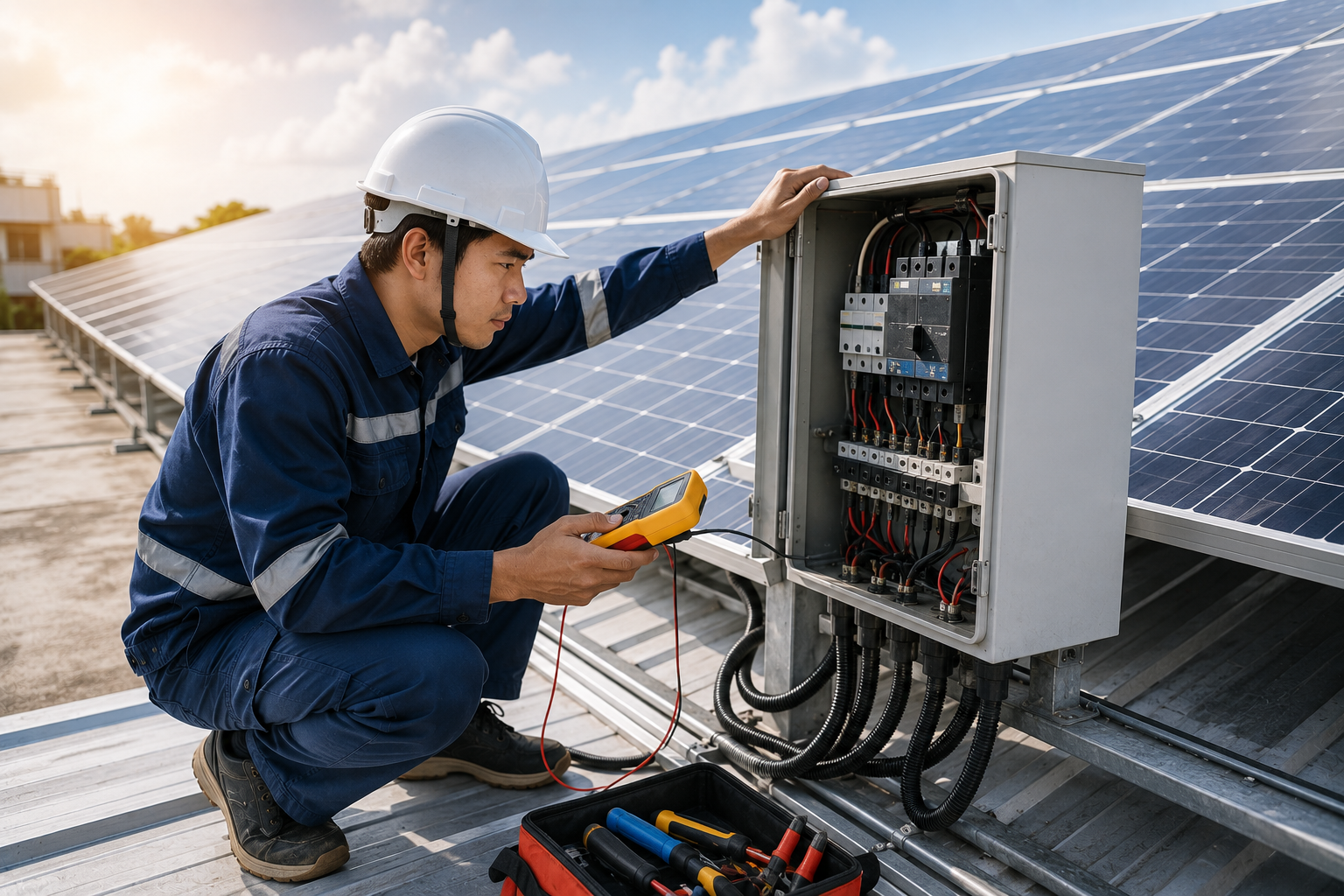
After handover, the business should know how to monitor system data, record alerts, and contact technical support when abnormalities occur. Solar panels, inverters, electrical cabinets, cables, mounting structures, and the roof should all be inspected according to actual conditions.
A typical factory rooftop solar project involves the following steps:
Identify the business's needs and investment objectives.
Collect electricity bills and consumption data.
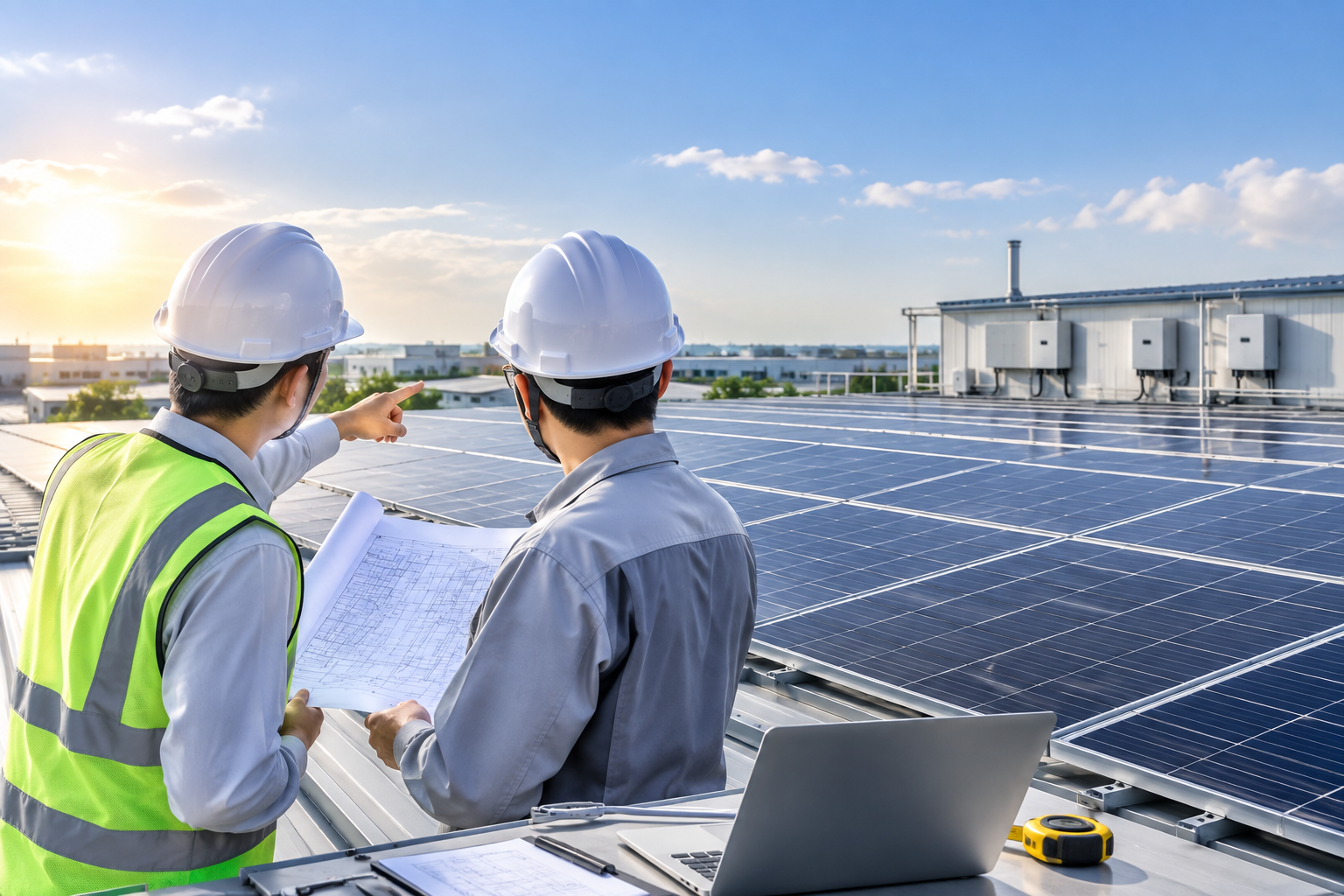
Survey the roof, electrical cabinets, and connection points.
Analyze the factory's load profile.
Determine system capacity and configuration.
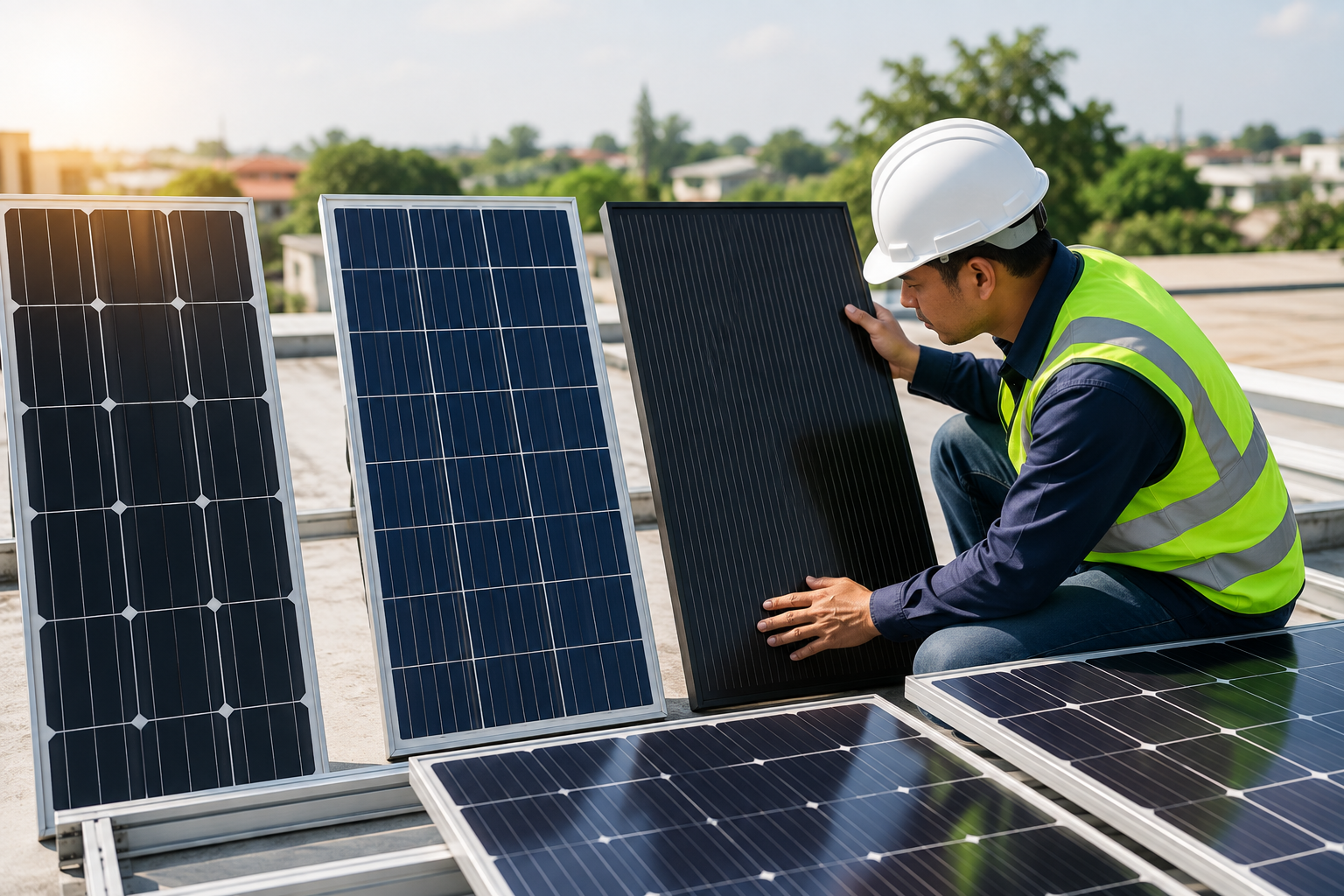
Select solar panels, inverters, and protective equipment.
Estimate electricity generation and expected investment returns.
Prepare the technical design and installation plan.
Assess structural safety and other relevant requirements.
Install the system, complete electrical connections, and configure monitoring.
Inspect, commission, test, and accept the completed system.
Provide operating instructions, maintenance guidance, and alert-handling procedures.
Each factory has different structural conditions, load profiles, and operating requirements. Therefore, the system should be designed around the actual site rather than based on a standard configuration.
Businesses should prioritize providers capable of:
Conducting an on-site survey
Analyzing electricity bills and load profiles
Recommending system capacity based on actual demand
Designing suitable electrical and structural systems
Providing clear equipment specifications
Implementing safety measures for working at height
Including appropriate electrical protection systems
Estimating generation using transparent assumptions
Coordinating installation with the factory's operating schedule
Providing electricity generation monitoring software
Delivering technical documentation and operating instructions
Supporting warranty claims, maintenance, and repairs
Businesses should also require clear agreements defining each party's responsibilities for the roof, equipment, electricity generation, warranties, and post-installation operation.
Generally, no. Solar power reduces the amount of electricity purchased from the grid during sunny hours. Businesses may still need grid electricity at night, during unfavorable weather, or when demand exceeds solar generation.
Not necessarily. System capacity must match the load profile, available roof area, grid connection conditions, and investment objectives. Oversizing the system relative to on-site demand may reduce financial returns.
Yes, provided the roof and building structure meet the technical requirements. Before installation, the roof sheets, purlins, load-bearing capacity, waterproofing, and remaining service life must be assessed.
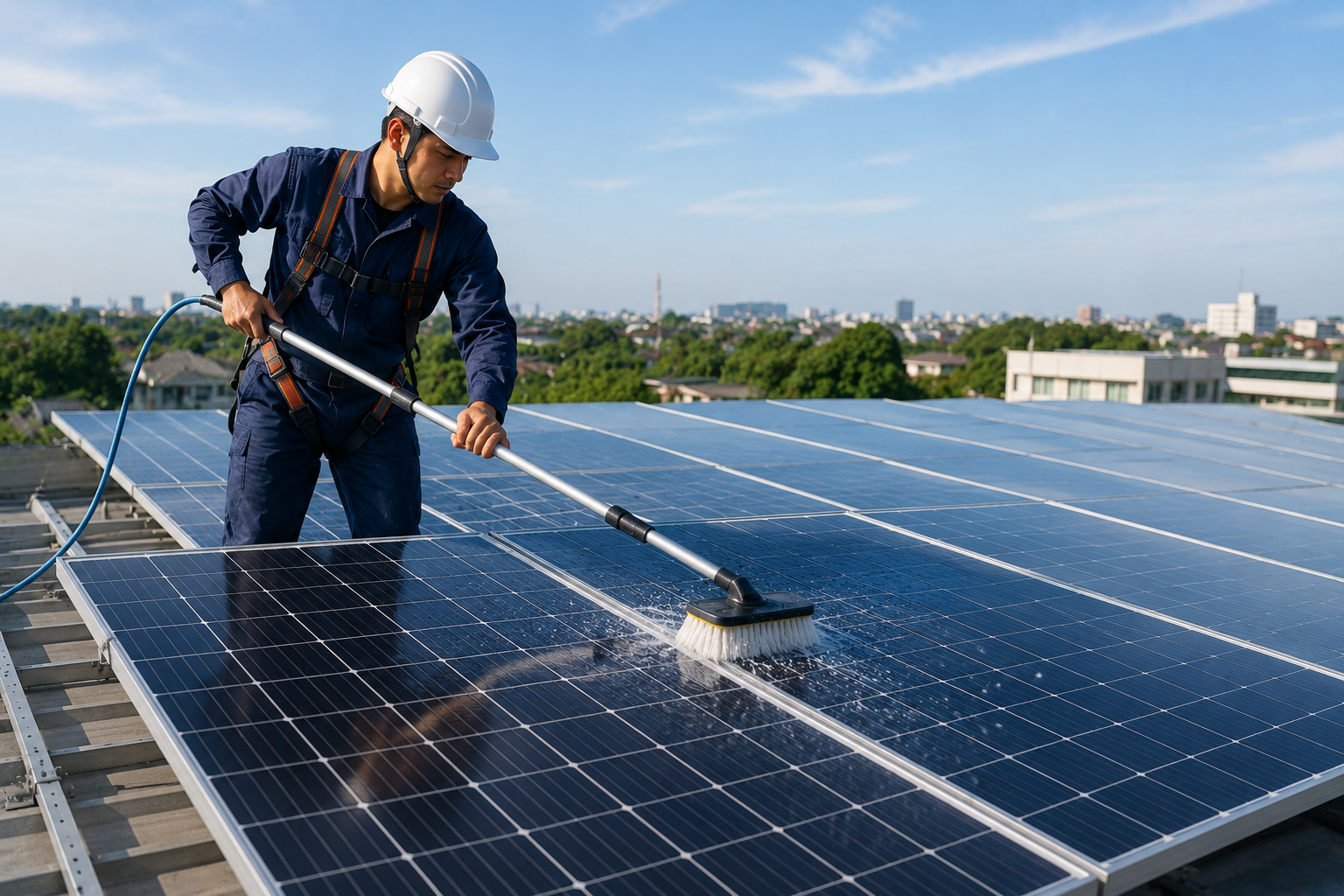
Yes. Businesses should monitor electricity generation, clean the panels according to actual conditions, and periodically inspect the inverter, cables, connectors, electrical cabinets, mounting structure, and roof.
There is no fixed payback period for every project. It depends on investment costs, electricity generation, the self-consumption rate, electricity prices, roof conditions, the financing model, and operating expenses.
Solar power offers several benefits to manufacturing businesses, including reducing electricity purchases from the grid, making use of factory roof space, improving energy cost management, and increasing renewable energy consumption. System data can also help businesses monitor generation, support environmental reporting, and better address the requirements of certain supply chain customers.
However, investment performance depends on more than the number of solar panels installed. Businesses need to analyze electricity demand, assess roof structures, appropriate system capacity, and account for costs throughout the operating period. A solution designed around actual site conditions can help ensure safe operation and deliver more consistent long-term value for the factory.
CATEGORIES
What Are the Main Components of a Solar Energy Storage System?
Solar Power System Design And Installation Process
How To Choose The Right Solar Panels
What Is A Solar Inverter? Its Role In A Solar Power System
When Should A Solar Power System Be Maintained?
How To Clean Solar Panels Properly
Signs That Your Solar Power System Needs Inspection Or Repair
Featured Products & Services
*YOU MAY ALSO LIKE
Contact us at Hotline: 0983 428 916 for consultation on solar energy equipment, system design, installation, and maintenance services.
Address: No. 105 Hoang Van Thai Street, Phuong Liet Ward, Ha Noi, Vietnam
Hotline: +84 983428916
Email: info@lochoangan.com
Loc Hoang An Tech specializes in consulting, designing, supplying equipment, and installing solar power systems for businesses, factories, industrial parks, commercial buildings, households, and civil construction projects nationwide.
LOC HOANG AN TECHNOLOGY GROUP JOINT STOCK COMPANY
Address: No. 105 Hoang Van Thai Street, Phuong Liet Ward, Ha Noi, Vietnam
Hotline: +84 983428916
Email: info@lochoangan.com
LOC HOANG AN TECHNOLOGY GROUP JOINT STOCK COMPANY
Địa chỉ: No. 105 Hoang Van Thai Street, Phuong Liet Ward, Ha Noi, Vietnam
Business Registration Certificate No. 0109587058 – Issued by the Department of Planning and Investment of Hanoi on April 07, 2021
Person responsible for content: Mr. Hien
@ Copyright by LOC HOANG AN TECHNOLOGY GROUP JOINT STOCK COMPANY. Designed by Vietnam Yellow Pages.