Hotline: +84 981638588
Email: info@lochoangan.com No. 105 Hoang Van Thai Street, Phuong Liet Ward, Ha Noi, Vietnam
Solar panels directly affect the capacity, electricity output, and operating performance of an entire solar power system. However, choosing solar panels should not be based solely on high wattage or low prices. Users should consider electricity demand, installation area, efficiency, temperature performance, durability, and compatibility with the inverter.
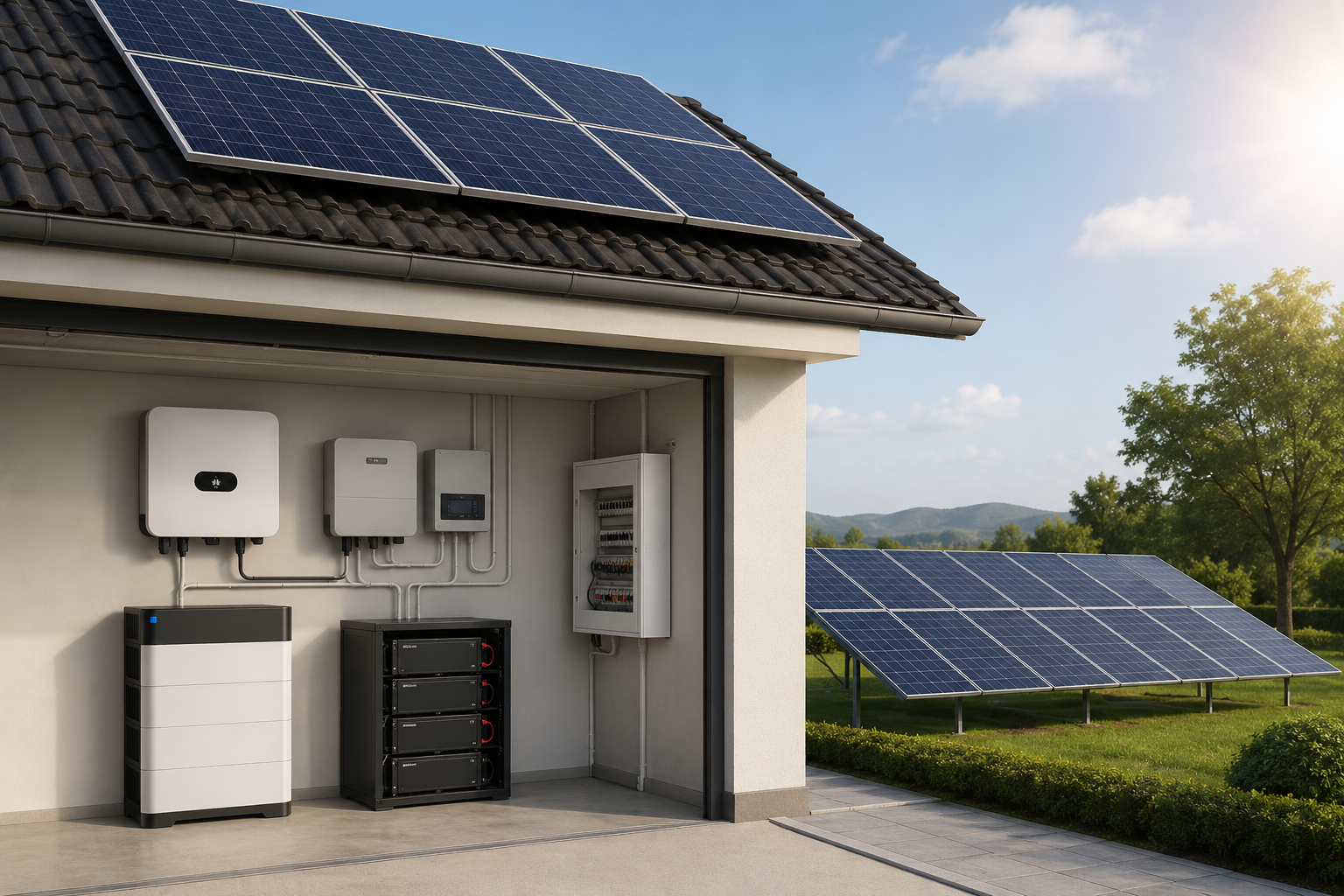
Solar panels are devices that absorb sunlight and convert it into direct current (DC) electricity. Multiple panels are connected into strings and linked to an inverter, which converts DC electricity into alternating current (AC) for residential or industrial use.
Depending on the design, solar panels can be used in:
Grid-tied solar power systems
Solar power systems with battery storage
Off-grid solar power systems
Residential solar power systems
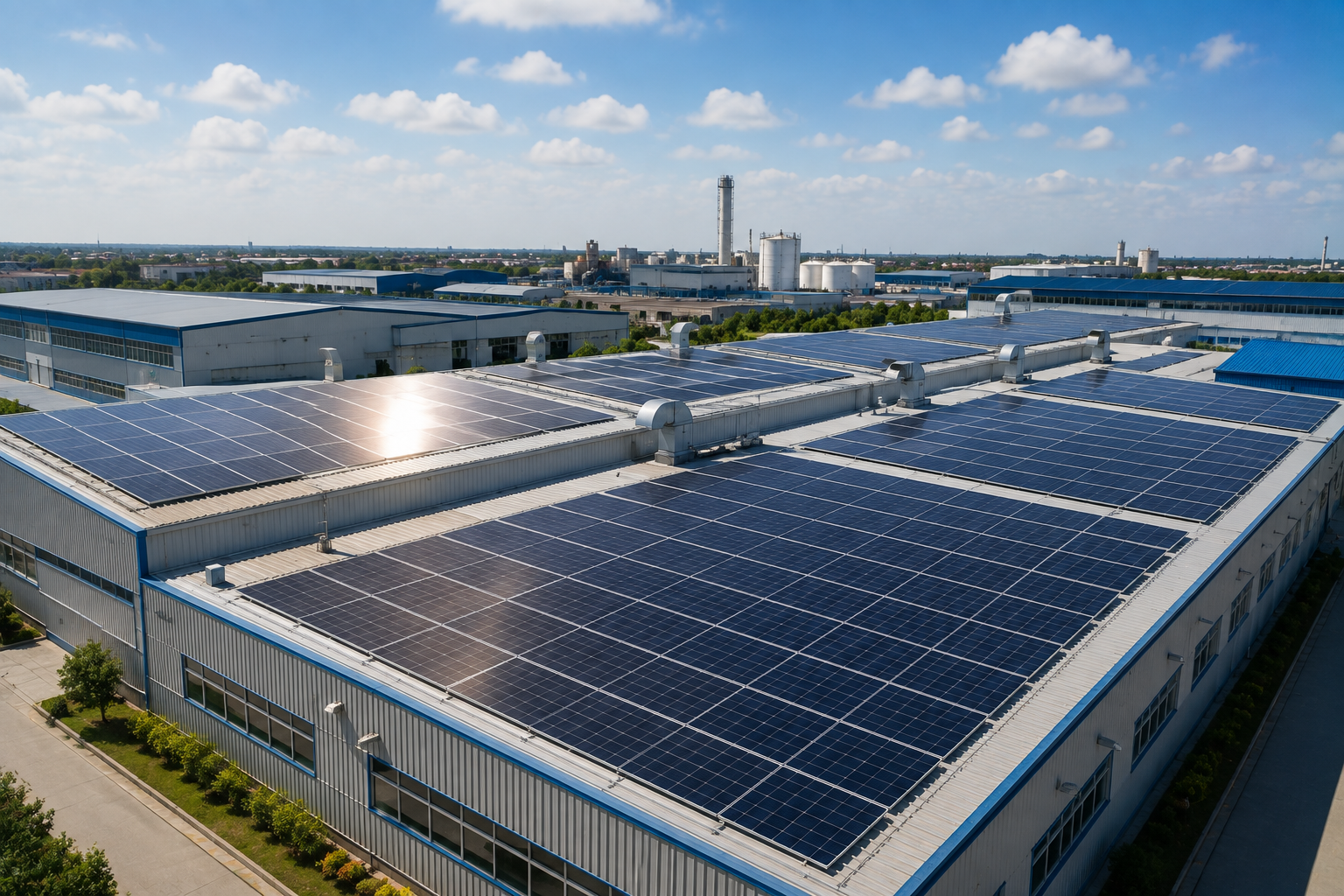
Industrial rooftop solar power systems
Solar farms
Power supply systems for remote areas
Every project has different roof areas, sunlight conditions, electricity consumption patterns, and investment objectives. Choosing unsuitable panels may result in lower-than-expected energy production, installation difficulties, or inverter compatibility issues.
Choosing the right solar panels helps to:
Maximize the use of available installation space
Meet electricity consumption requirements
Minimize operational energy losses
Ensure inverter compatibility
Reduce repair and replacement costs
Facilitate future system expansion
Maintain stable electricity generation over the long term
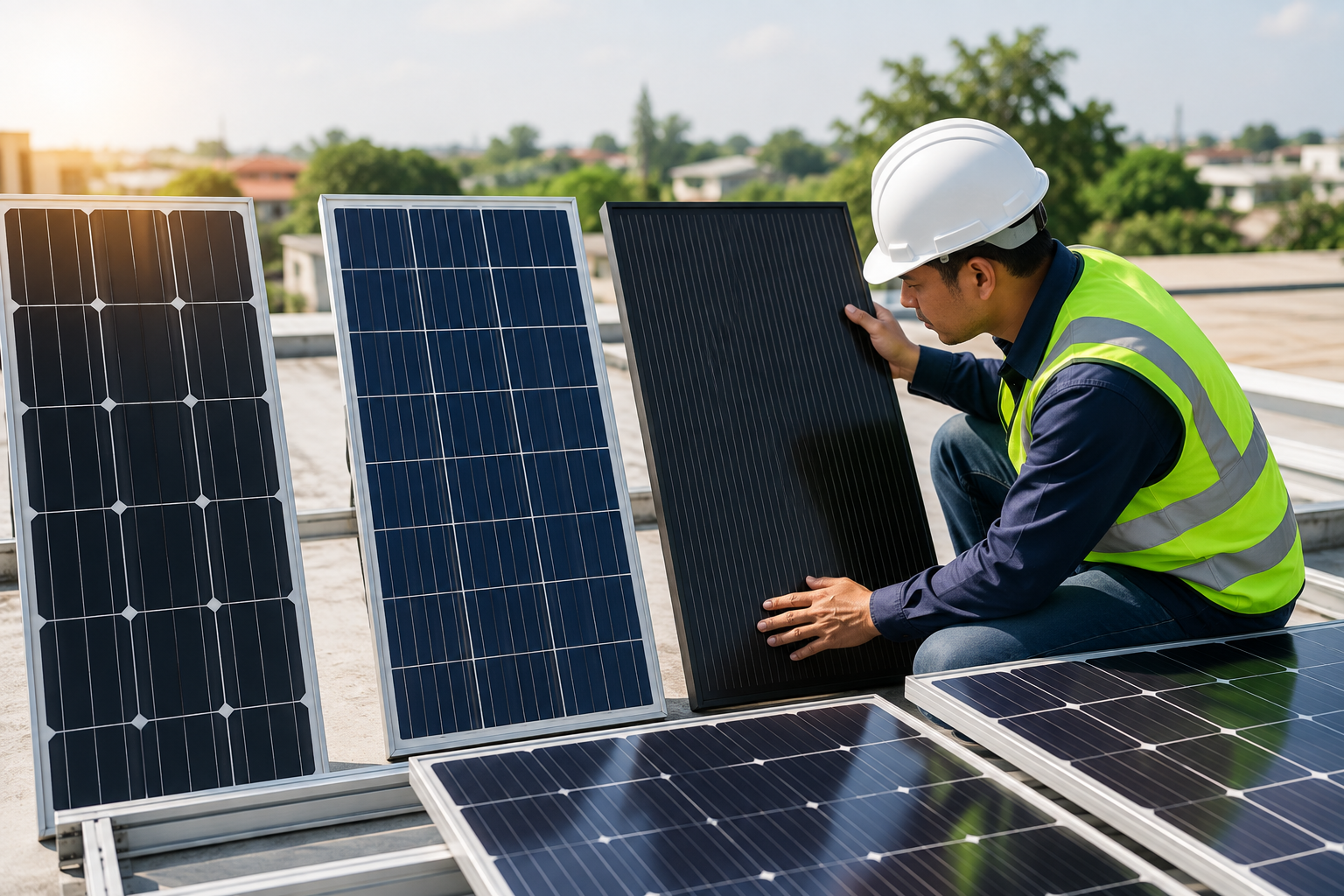
Monocrystalline panels, commonly known as mono panels, are manufactured using single-crystal silicon cells. They generally offer high efficiency and are suitable for projects with limited roof space.
These panels are widely used in residential, commercial, and industrial solar power systems. They typically feature a uniform black or dark blue appearance.
Polycrystalline panels, also known as poly panels, are made from multiple silicon crystals. They were widely used due to their reasonable cost but generally have lower efficiency than monocrystalline panels.
When ing this type, project owners should consider the balance between purchase price, installation area, and expected electricity generation.
Bifacial solar panels use glass on both the front and rear surfaces to provide additional protection for photovoltaic cells. Some models can also capture sunlight from both sides.
Rear-side energy generation depends on installation height, spacing between panel rows, the reflectivity of the underlying surface, and shading conditions. Therefore, the term "bifacial" alone should not be used to estimate actual energy output.
Before ing solar panels, determine electricity consumption levels and the main periods of usage. Households, offices, and factories have different load profiles.
The following information should be collected:
Average monthly electricity consumption
Daytime electricity usage
Peak load demand
Electricity cost reduction objectives
Backup power requirements during grid outages
Future load expansion plans
For manufacturing businesses, electricity bills from several months and hourly load data should be analyzed. This helps determine system capacity based on actual demand.
The rated wattage of each panel is only one part of the ion process. Panel dimensions and available roof area determine how many panels can be installed.
The site survey should assess:
Usable roof area
Roof orientation and tilt angle
Structural load-bearing capacity
Existing roof conditions
Shading from trees, walls, or nearby buildings
Space required for maintenance access
Drainage conditions
Local wind exposure
For roofs with limited space, high-efficiency panels should be prioritized to maximize installed capacity within the available area. Larger roofs provide greater flexibility in balancing efficiency and cost.
Rated power, measured in watts-peak (Wp), indicates a panel's output under standard test conditions. A panel with a higher wattage rating is not necessarily the better choice if its dimensions, voltage, or current do not meet the system design requirements.
When comparing panels, consider:
Maximum power output
Panel dimensions
Module efficiency
Voltage at maximum power (Vmp)
Current at maximum power (Imp)
Open-circuit voltage (Voc)
Short-circuit current (Isc)
Product weight
Selection should be based on overall system energy production and practical installation requirements rather than comparing the Wp rating of individual panels alone.
Efficiency indicates the proportion of sunlight converted into electricity. For the same installation area, higher-efficiency panels generally produce more power.
Efficiency is particularly important for:
Townhouses with small roofs
Projects with limited installation space
Factories seeking to maximize rooftop capacity
Projects planning future load expansion
Installations where fewer panels are preferred
However, efficiency is not the only ion criterion. Durability, warranty coverage, temperature performance, and investment costs must also be evaluated.
As panel surface temperature rises, power output may decrease. The power temperature coefficient indicates how much output changes as photovoltaic cell temperature varies from the reference condition.
This coefficient is generally negative. A value closer to zero indicates a smaller reduction in power output as temperature increases. This factor is particularly important for factory rooftops and regions with high ambient temperatures.
In addition to checking the temperature coefficient, the installation design should provide adequate clearance beneath panels to improve ventilation and reduce heat accumulation.
Solar panel output gradually decreases over time. Buyers should therefore check the degradation rate during the first year and the minimum power output guaranteed at the end of the warranty period.
Do not evaluate panels based solely on the number of warranty years. Check the following details:
Guaranteed minimum power output
First-year degradation rate
Annual degradation rate
Warranty conditions
Responsible warranty service provider
Product inspection and replacement procedures
Panels with lower degradation rates help maintain better energy production throughout their service life.
Product warranties and performance warranties cover different aspects.
A product warranty generally covers material defects, manufacturing defects, or damage for which the manufacturer is responsible. A performance warranty guarantees a specified level of remaining power output after a defined period.
When comparing products, customers should review both policies and verify how warranty claims are handled in Vietnam. A long warranty period is meaningful only when the supplier can provide clear and reliable support.
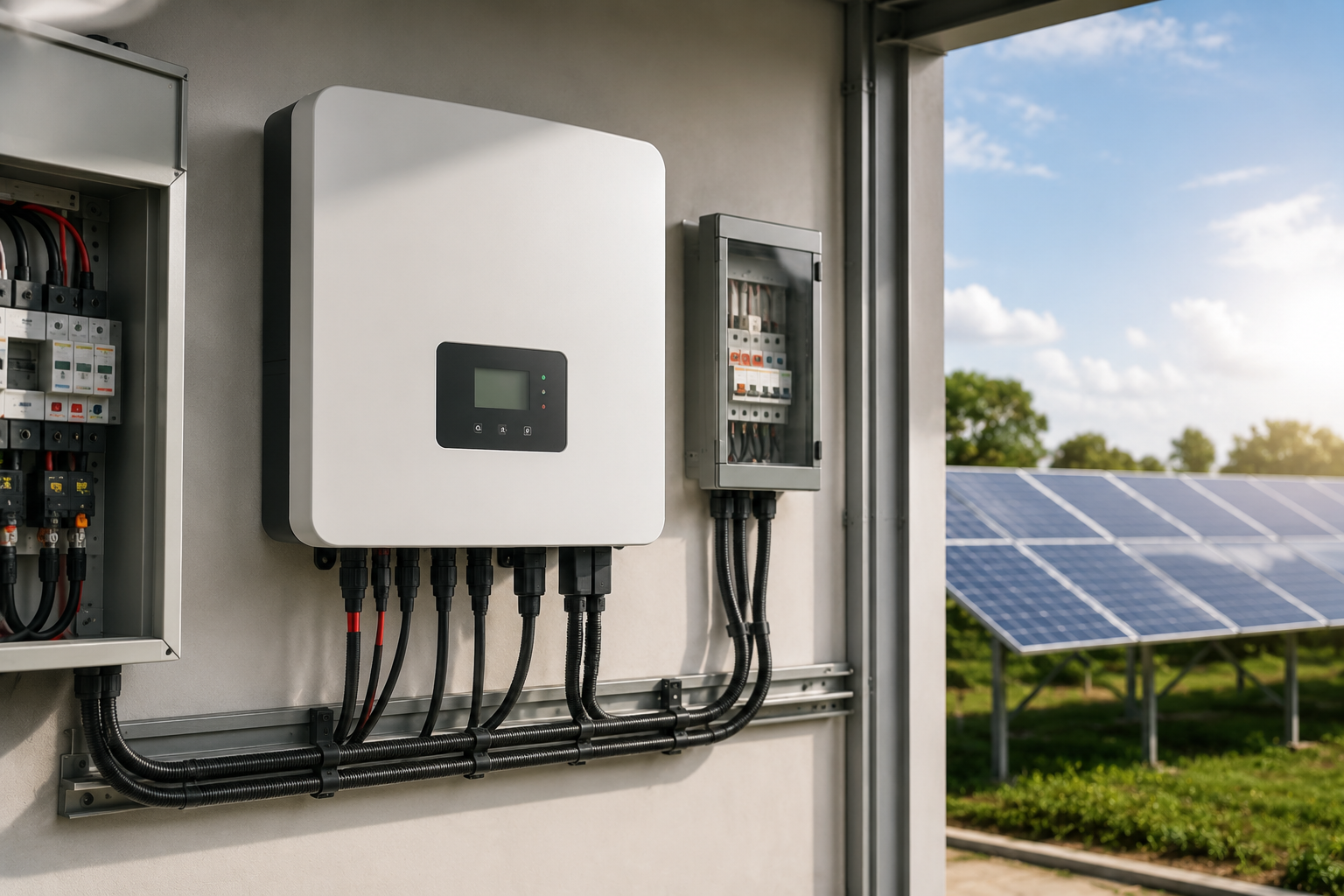
Each solar panel has specific voltage and current characteristics. When panels are connected in strings, the total voltage and current must remain within the inverter's operating limits.
The design team should calculate:
Number of panels per string
String voltage under different temperature conditions
Inverter input current
Maximum Power Point Tracking (MPPT) voltage range
Number of MPPT inputs
Permitted DC input capacity
Future system expansion capability
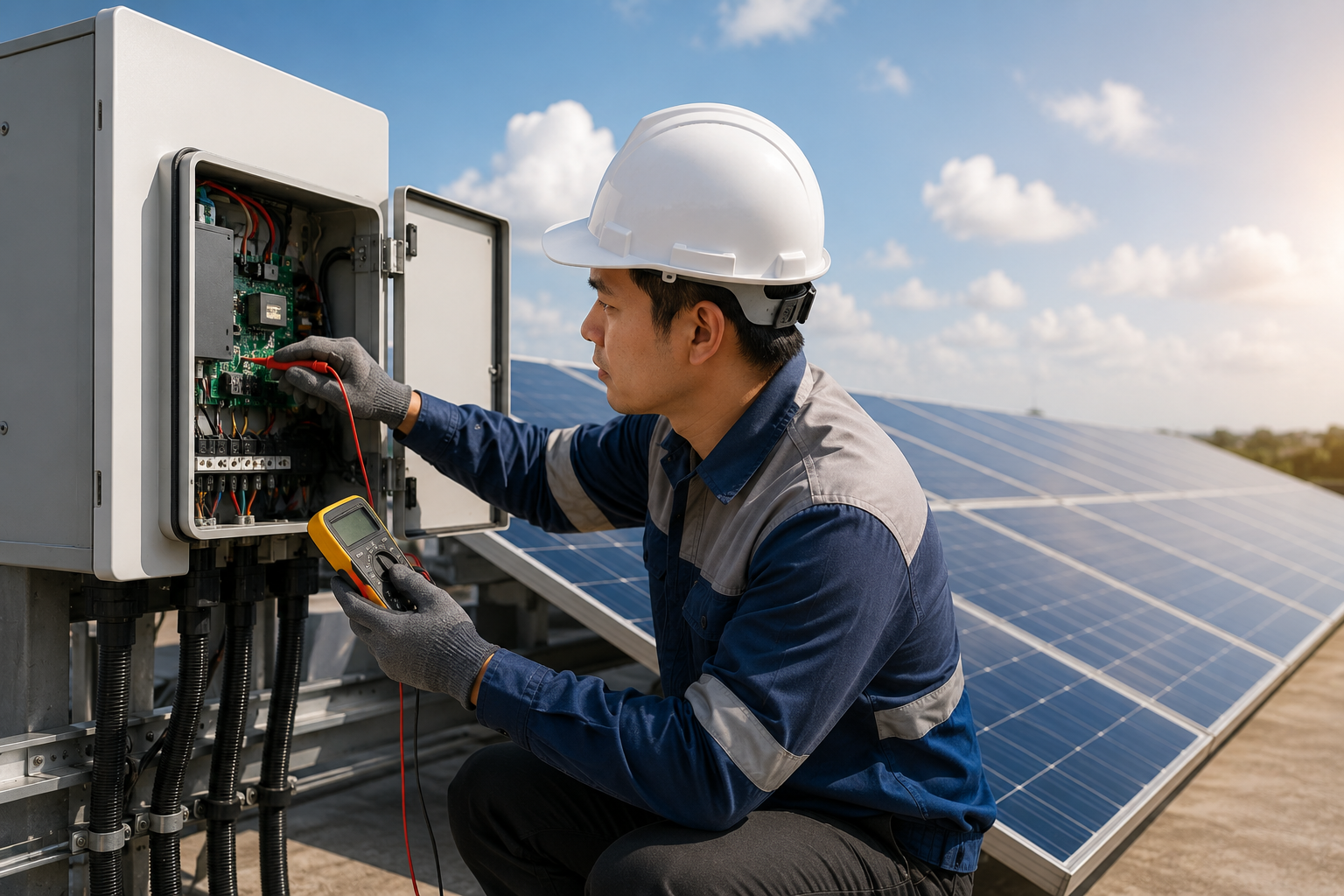
Incorrect string configuration may reduce inverter efficiency, trigger system warnings, or prevent stable operation. Electrical connections should be designed and completed by qualified technicians.
Solar panels are installed outdoors for extended periods and must withstand temperature variations, humidity, rain, wind, and dust. For coastal areas, agricultural facilities, or specialized industrial environments, resistance to salt mist, ammonia, and corrosive conditions should also be considered.
Key factors to check include:
Wind load resistance
Snow load resistance, where applicable
Junction box protection rating
Aluminum frame quality
Glass durability
Moisture resistance
Corrosion resistance
Manufacturer installation requirements
The IEC 61215 series addresses the design qualification of terrestrial photovoltaic modules, while IEC 61730 specifies fundamental safety requirements and testing. However, compliance with these standards does not guarantee an exact service life, as durability also depends on design, environmental conditions, and operating practices.
Solar panels should have clear identification and documentation to facilitate system design, acceptance testing, and warranty claims. Customers should request:
Manufacturer name and product model
Manufacturer's datasheet
Serial numbers for individual panels
Relevant quality certifications
Transportation and installation instructions
Warranty terms
Distributor information
Product inspection reports, where available
Products should not be ed solely on the basis of images, selling prices, or advertising claims without supporting technical documentation.
Solar panel prices account for only part of the total solar power system investment. A low-cost panel that requires more installation space, mounting structures, and labor may not deliver better overall economic performance.
Total costs should include:
Solar panel purchase costs
Mounting structures and accessories
Cables and connectors
Transportation costs
Installation costs
Maintenance expenses
Potential future replacement costs
Expected electricity generation over the system's service life
Project owners should compare alternatives based on expected energy output, operational reliability, and total lifecycle costs.
There is no single panel wattage suitable for every project. Selection depends on roof area, structural capacity, required system capacity, inverter specifications, and panel layout.
Higher-wattage panels may reduce the number of panels required, but they are often larger and heavier. This can affect transportation, rooftop handling, walkway arrangements, and maintenance access.
The design team should compare several layout options before ing the most suitable module wattage.
Higher wattage does not necessarily mean higher efficiency or better real-world energy production. Panel dimensions, temperature coefficients, and inverter compatibility must also be considered.
Lower-priced panels may reduce initial investment costs but do not necessarily offer the same durability, degradation performance, or warranty support.
Buying equipment before surveying the site may lead to insufficient space, installation difficulties, or costly system redesigns.
Warranty commitments should be documented in writing, with a clearly identified service provider. Customers should not rely solely on verbal assurances from sellers.
Panels with different power ratings, current levels, and voltages may cause electrical imbalances when connected in the same string. Any changes to panel configurations should be verified against the system's electrical design.
In addition to product quality, supplier capabilities also affect the overall investment outcome. Customers should prioritize suppliers that:
Conduct site surveys before making recommendations
Calculate system capacity based on actual electricity demand
Provide clear product specifications and documentation
Ensure compatibility between solar panels and inverters
Have qualified installation teams
Perform system inspections and acceptance testing
Offer transparent warranty policies
Provide post-installation monitoring and technical support
Choosing the right solar panels requires evaluating electricity consumption, roof area, rated power, efficiency, temperature coefficient, degradation rate, technical standards, and warranty conditions. Panels must also be compatible with the inverter and suitable for the environmental conditions at the installation site.
A thorough site survey and integrated system design from the outset help maximize available space, maintain stable electricity production, and minimize unexpected costs. Households, businesses, and project owners should choose a provider capable of delivering consultation, equipment supply, system design, and turnkey installation services.
CATEGORIES
What Are the Main Components of a Solar Energy Storage System?
Solar Power System Design And Installation Process
How To Choose The Right Solar Panels
What Is A Solar Inverter? Its Role In A Solar Power System
When Should A Solar Power System Be Maintained?
How To Clean Solar Panels Properly
Signs That Your Solar Power System Needs Inspection Or Repair
Featured Products & Services
*YOU MAY ALSO LIKE
Contact us at Hotline: 0983 428 916 for consultation on solar energy equipment, system design, installation, and maintenance services.
Address: No. 105 Hoang Van Thai Street, Phuong Liet Ward, Ha Noi, Vietnam
Hotline: +84 983428916
Email: info@lochoangan.com
Loc Hoang An Tech specializes in consulting, designing, supplying equipment, and installing solar power systems for businesses, factories, industrial parks, commercial buildings, households, and civil construction projects nationwide.
LOC HOANG AN TECHNOLOGY GROUP JOINT STOCK COMPANY
Address: No. 105 Hoang Van Thai Street, Phuong Liet Ward, Ha Noi, Vietnam
Hotline: +84 983428916
Email: info@lochoangan.com
LOC HOANG AN TECHNOLOGY GROUP JOINT STOCK COMPANY
Địa chỉ: No. 105 Hoang Van Thai Street, Phuong Liet Ward, Ha Noi, Vietnam
Business Registration Certificate No. 0109587058 – Issued by the Department of Planning and Investment of Hanoi on April 07, 2021
Person responsible for content: Mr. Hien
@ Copyright by LOC HOANG AN TECHNOLOGY GROUP JOINT STOCK COMPANY. Designed by Vietnam Yellow Pages.