Hotline: +84 981638588
Email: info@lochoangan.com No. 105 Hoang Van Thai Street, Phuong Liet Ward, Ha Noi, Vietnam
Solar panels are installed outdoors, where they are regularly exposed to dust, leaves, bird pings, pollen, and airborne contaminants. When the glass surface becomes covered with dirt, the amount of sunlight reaching the photovoltaic cells may decrease, affecting the system&rsquos electricity output.
Proper solar panel cleaning helps remove dirt, maintain light absorption, and identify potential issues at an early stage. However, cleaning must be carried out at the right time, with suitable tools and appropriate safety measures to avoid scratching the glass, damaging connectors, or putting workers at risk.
Rain can wash away some dirt, but it does not always completely clean the panel surface. Mud, bird pings, tree sap, and industrial dust may accumulate over time, particularly along the lower edges of the panels.
Regular cleaning offers several benefits:
Reduces light obstruction caused by dirt
Helps maintain the system&rsquos electricity output
Identifies cracked, broken, or discolored panels
Allows inspection of frames and mounting clamps
Helps detect sagging or damaged cables
Prevents excessive long-term dirt accumulation
Supports performance monitoring
Keeps panel surfaces clean and easy to inspect
The impact of dirt varies from one installation to another. Systems located near major roads, factories, construction sites, farms, or in areas with limited rainfall tend to accumulate dirt more quickly.
There is no fixed cleaning schedule suitable for every system. The appropriate frequency depends on the installation location, rainfall, panel tilt angle, and surrounding environmental conditions.
Visually inspect the panels to assess the level of dust accumulation. If a noticeable layer of dust covers the surface or dirt has accumulated in patches, the system should be cleaned.
This situation is common at:
Manufacturing facilities
Industrial parks
Sites near roads
Areas under construction
Livestock farms
Locations with heavy smoke or fine dust
Dry areas with limited rainfall
These contaminants can cover parts of the panel surface and may not be completely removed by rain. If left for too long, they can dry and harden, making them more difficult to remove.
Avoid using sharp objects to scrape off dirt, as they may scratch the glass or damage the surface coating.
Electricity generation depends on weather conditions, the season, and the duration of sunlight. However, if output s significantly compared with days with similar sunlight conditions, the panel surfaces should be inspected.
In addition to dirt, reduced output may be associated with:
Newly developed shading
A disconnected string of panels
The inverter limiting power output
Faulty panels or connectors
An unstable utility grid
Interrupted monitoring data
Therefore, not every case of reduced output should be attributed to dirty solar panels.
During the dry season, dust can continuously accumulate on panel surfaces. Systems in dusty areas should be inspected more frequently to determine when cleaning is necessary.
Heavy rain and strong winds can carry leaves, small branches, mud, and other debris onto the system. Once the weather has stabilized, inspect the panels, mounting structures, cables, and drainage areas.
Never access the roof for inspection while it is raining, winds are strong, or the roof surface is slippery.
Cleaning frequency should be determined by actual conditions rather than by rigidly following a fixed interval. The following schedule can be used as a reference:
|
Installation Conditions |
Recommended Inspection and Cleaning Frequency |
|---|---|
| Areas with little dust and regular rainfall | Inspect periodically and clean when necessary |
| Residential properties near roads | Approximately every 3&ndash6 months |
| Factories or industrial parks | Approximately every 1&ndash3 months, depending on dust levels |
| Sites near construction areas | Inspect frequently while construction is underway |
| Areas with many trees or birds | Clean when contaminants begin to accumulate |
| Systems experiencing an unusual in output | Inspect immediately to identify the cause |
These intervals are for reference only. Operators should combine visual inspections with electricity generation data to establish a cleaning schedule suitable for each installation.
Cleaning tools should be soft, clean, and non-abrasive to prevent scratches on the glass surface. A basic cleaning kit may include:
Clean water
A soft-bristled broom or brush
A specialized long-handled cleaning tool
A soft, lint-free cloth
A water hose with moderate pressure
A soft rubber squeegee
A bucket of clean water
Non-slip footwear
Gloves and personal protective equipment
Safety harnesses for working at height
For large-scale systems, maintenance providers may use specialized cleaning equipment, treated water, or machinery suited to the installation structure.
In most cases, clean water and soft tools are sufficient to remove ordinary dirt. Cleaning solutions should only be used when permitted by the solar panel manufacturer.
Avoid using:
Corrosive chemicals
Strong cleaning agents
Industrial solvents
Abrasive powders or creams
Abrasive cleaning tools
Soaps that leave excessive residue
Water with very high mineral content if it is likely to leave deposits
If a cleaning solution is used, it must be diluted at the correct ratio, and the surface should be rinsed according to the instructions. Do not mix chemical solutions yourself without confirming their compatibility with the glass, surface coating, and panel frame.
Solar panels should be cleaned early in the morning, during cooler afternoon hours, or when the panels have cooled down. At these times, the surface is not excessively hot, and working conditions are generally more manageable.
Avoid cleaning at midday in direct sunlight because:
Panel surfaces may become extremely hot.
Water evaporates quickly and may leave mineral deposits.
Temperature differences may affect the glass surface.
Working conditions on the roof become more demanding.
The risk of dehydration and slipping increases.
In particular, do not spray cold water directly onto panels that are at a high temperature.
Only clean the panels when the weather is dry, winds are light, and the work area is safe. If the roof is still wet or thunderstorms are possible, postpone the work.
For rooftop systems, identify the access route, safe standing positions, and fall-prevention measures before starting.
Before cleaning, record the system&rsquos electricity generation data from the inverter or monitoring platform. This information can be used for comparison after cleaning.
The comparison must account for weather conditions, as electricity output may differ between two days even when the panels have been cleaned.
Inspect the entire system for signs of:
Cracked or broken panels
Bent or misaligned frames
Loose mounting clamps
Cables displaced from their proper positions
Discolored connectors
Signs of water ingress in junction boxes
New obstructions or shading
Bird nests, branches, or debris on the roof
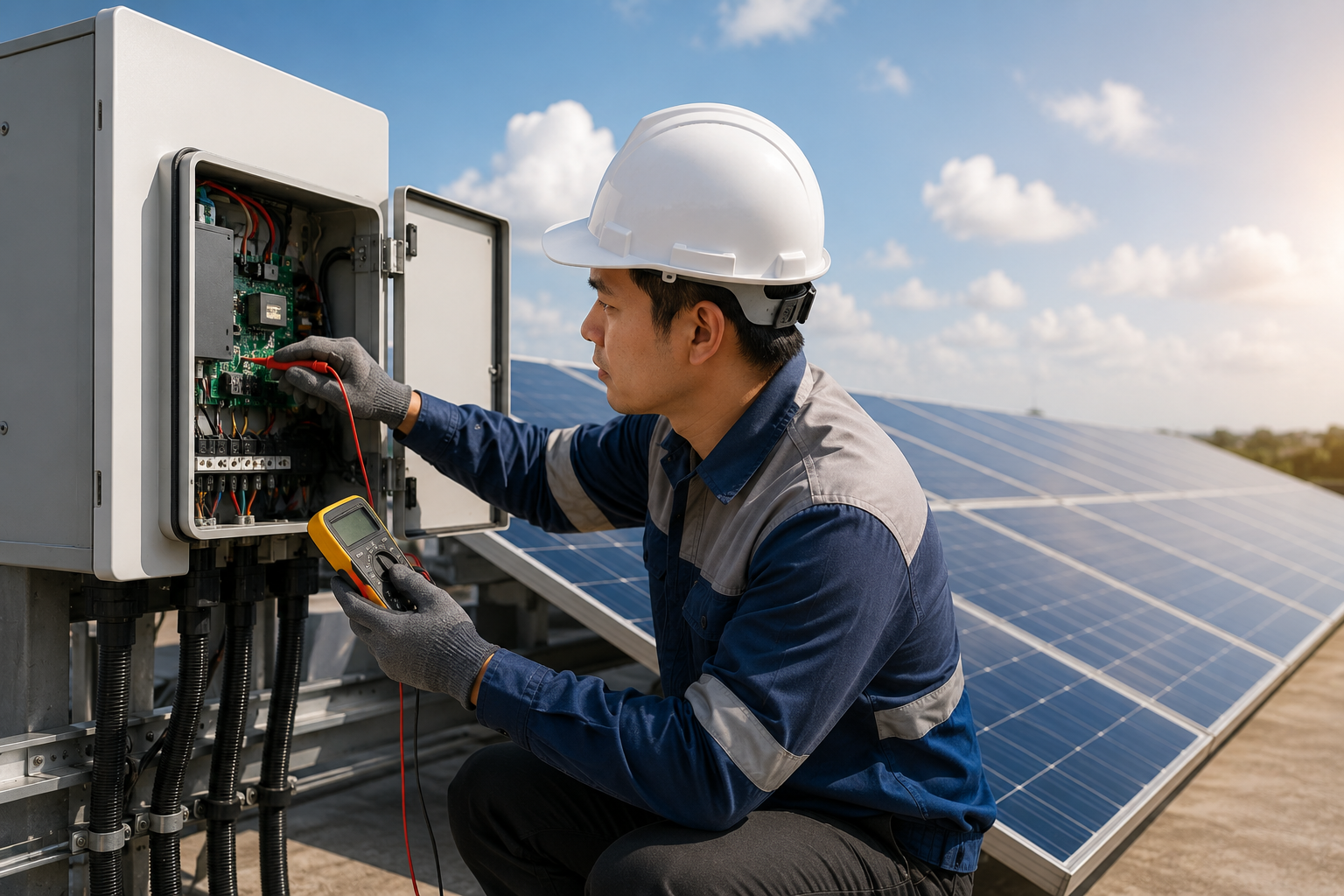
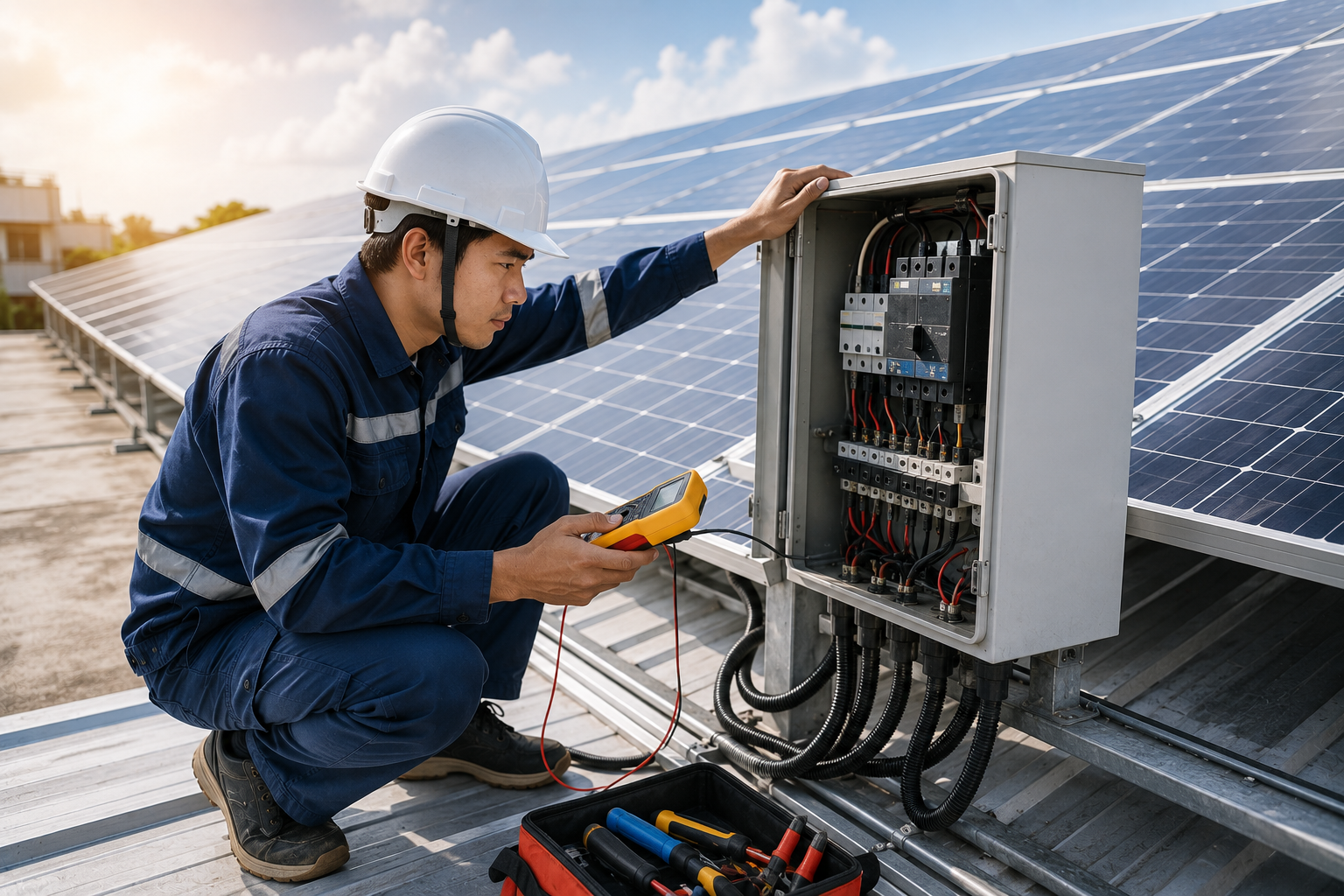
If exposed electrical wires, unusual odors, broken panels, or water-damaged electrical equipment are detected, do not proceed with cleaning. Contact a qualified technician for inspection.
The system must be placed in an appropriate operating state in accordance with the installation provider&rsquos and equipment manufacturer&rsquos instructions. Note that solar panels can continue generating DC electricity in the presence of sunlight, even when the inverter has been switched off.
People without the necessary technical qualifications should not:
Open the inverter or electrical cabinet
Disconnect DC connectors
Touch exposed electrical wiring
Reconnect electrical cables themselves
Remove panels from the mounting structure
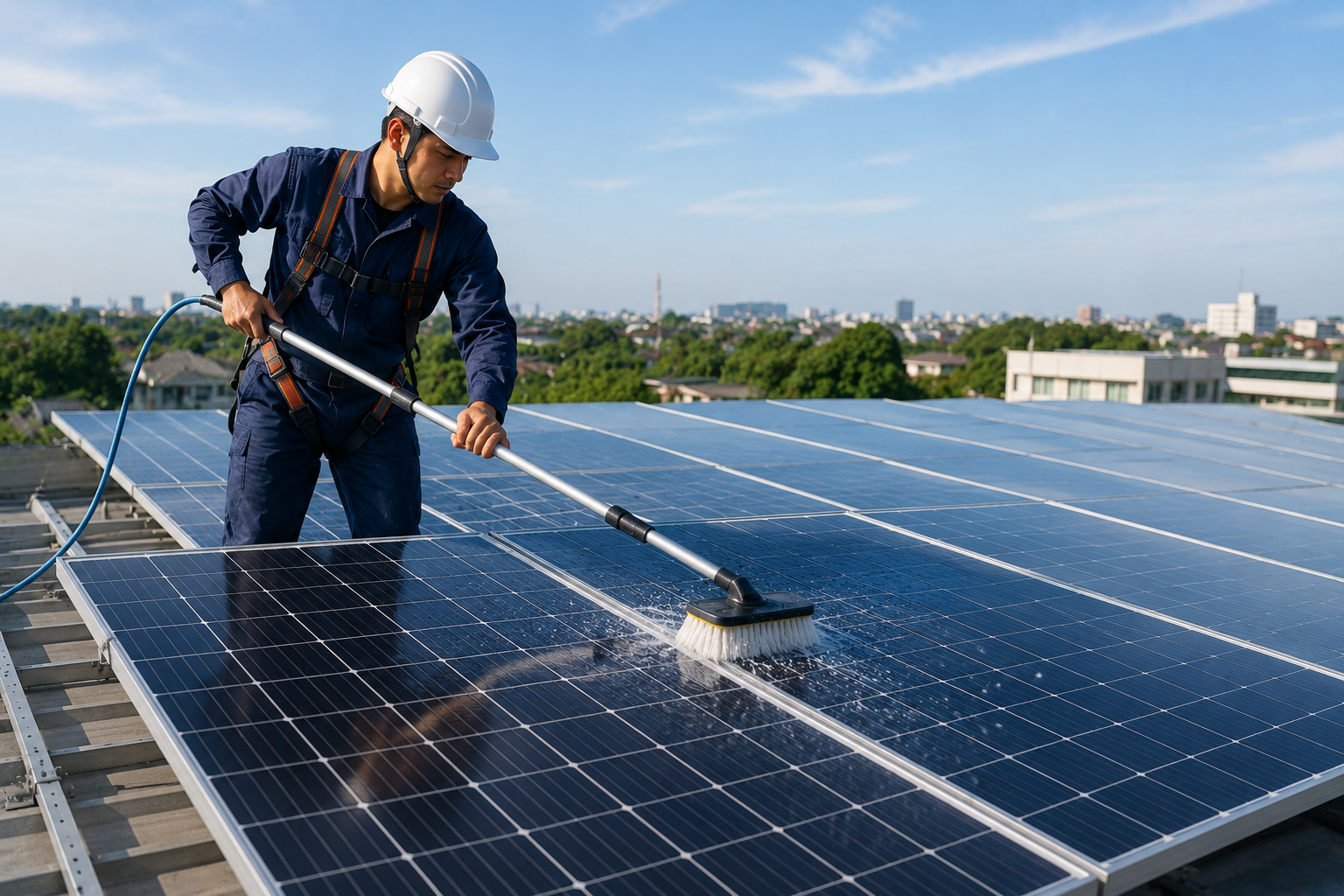
Use clean water to wet the surface evenly so that dust and dirt can soften. Water pressure should be moderate. Avoid directing high-pressure water at:
Panel edges
Junction boxes
Electrical connectors
Panel joints
Cable locations
Inverters and electrical cabinets
Do not use a high-pressure washer unless the manufacturer explicitly permits it.
Use a soft brush or specialized cleaning tool to move gently across the surface. Clean from the upper sections downward so that dirty water drains along the panel slope.
For bird pings or hardened dirt, wet the affected area and allow the deposits to soften before wiping. Do not scrape them off with knives, metal brushes, or hard objects.
After cleaning, rinse the surface to remove dirt and any remaining cleaning solution. If the water supply is likely to leave mineral deposits, use a soft rubber squeegee or a suitable cloth to minimize water marks.
Do not step on or place your full body weight on the solar panels during cleaning.
Once the surface is clean, inspect the following again:
Glass condition
Aluminum frames
Panel mounting clamps
Cables underneath the panels
Electrical connectors
Drainage performance
Any remaining debris or obstructions
Cleaning tools and water must not affect the inverter, electrical cabinets, or protective equipment.
After the system has been returned to operation according to the proper procedure, monitor:
Inverter status
Software alerts
Electricity output
Power output from each MPPT
Differences between panel strings
If output remains unusually low after cleaning, the system should undergo a technical inspection rather than repeated cleaning.
Panel surfaces can reach high temperatures at midday. Spraying cold water at this time causes rapid evaporation and creates unsafe working conditions.
Hard tools can scratch the glass or damage its coating. Scratches not only affect appearance but may also make the surface more prone to dirt accumulation.
Unsuitable chemicals can affect the glass, frame, adhesive, or other panel materials. Always check the manufacturer&rsquos instructions before using any cleaning product.
Strong water jets can affect panel edges, junction boxes, and electrical connectors. Water pressure should only be high enough to rinse away dirt that has already been softened.
Solar panels are not designed to support a person's body weight. Standing on them may crack the glass or cause damage that is difficult to detect visually.
Clean panels do not necessarily mean the entire system is operating properly. Maintenance should also include checks of mounting structures, cables, inverters, protective devices, and electricity generation data.
Metal roofs and panel surfaces can become slippery when wet. Installations on high roofs, steep slopes, or roofs without safe access routes should be cleaned by qualified providers with appropriate personnel and protective equipment.
Homeowners may clean their own panels if the system is installed in an accessible, low-level location and the work does not require operating near electrical equipment. However, they should limit their work to simple tasks, such as removing dust with water and soft tools.
Professional service providers should be hired when:
The system is installed on a high roof.
The roof has a steep slope.
The site lacks safe access routes.
The solar array covers a large area.
Panels are located close to the roof edge.
There are signs of electrical damage.
The inverter displays an error.
Electricity output has ped for an unknown reason.
Individual panel strings need to be tested.
The system belongs to a factory or industrial facility.
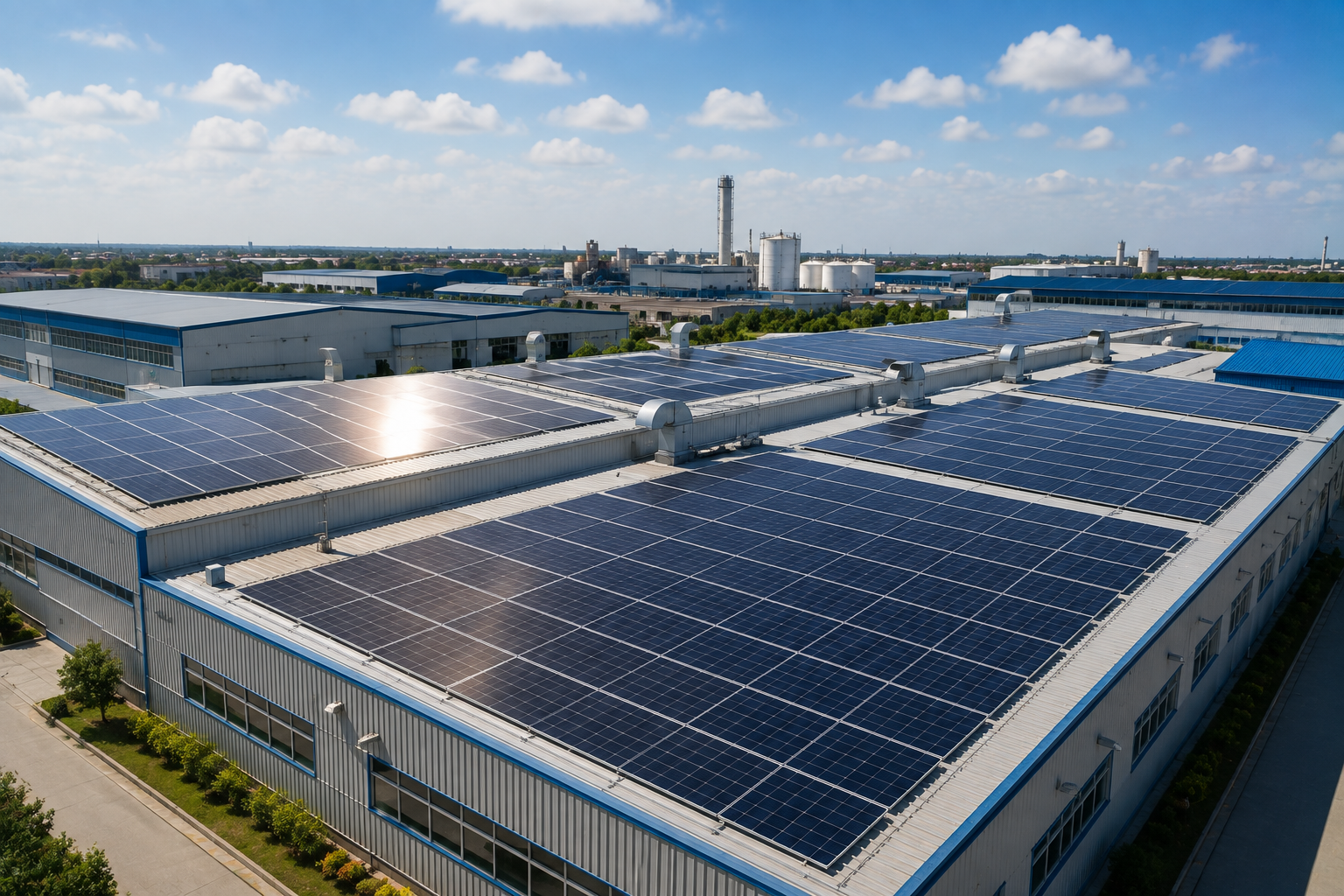
For industrial systems, panel cleaning should be integrated into the overall maintenance plan and the facility&rsquos safety procedures.
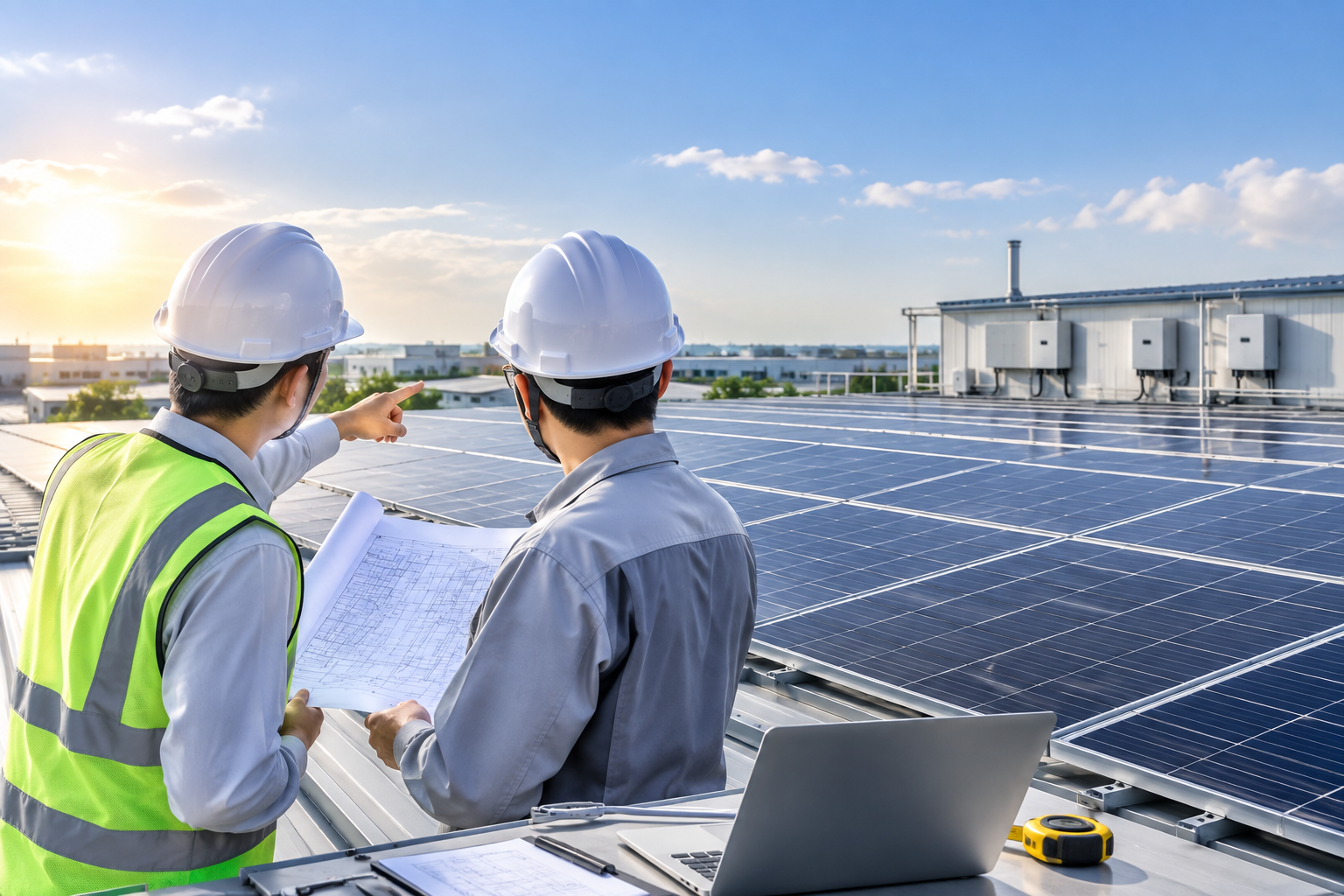
Rooftop solar systems at factories often contain large numbers of panels and have complex access conditions. Before starting work, the service provider should assess:
Roof structure and condition
Access and exit routes
Safety harness anchor points
Spacing between panel rows
Locations of gutters and skylights
Inverter and electrical cabinet locations
Available water sources
Drainage routes after cleaning
The factory&rsquos operating schedule
Internal safety requirements
Water and dirt should not flow into production areas, warehouses, or equipment below the roof. The cleaning plan should also minimize disruption to business operations.
Cleaning effectiveness should not be judged solely by the appearance of the panel surface. Operators can assess the results by checking:
Electricity generation data on the monitoring platform
Inverter output power
Individual MPPT data
Differences between panel strings
Comparisons with data recorded before cleaning
Comparisons under similar weather conditions
Equipment alerts or error codes
If the panels are clean but output remains low, the cause may be shading, cables, connectors, the inverter, the utility grid, or the photovoltaic modules themselves.
Customers should choose a service provider capable of:
Surveying the site before starting work
Implementing safety measures for working at height
Using tools suitable for solar panels
Following the manufacturer&rsquos instructions
Conducting preliminary electrical and mechanical inspections
Monitoring electricity generation data before and after cleaning
Avoiding unauthorized disconnection of connectors or system configuration changes
Providing technical personnel to respond to detected faults
Preparing inspection records and documenting the system&rsquos condition
Recommending a cleaning schedule based on actual conditions
A cleaning provider must do more than clean the panel surfaces. The service should also minimize the risk of damage to the roof, solar panels, and the entire electrical system.
Proper solar panel cleaning should be carried out during cooler periods, using clean water and soft tools, while complying with electrical safety and working-at-height requirements. Strong cleaning chemicals, sharp objects, hard brushes, and excessively high water pressure should be avoided.
Cleaning frequency depends on dust levels, installation location, weather conditions, and the operating data of each system. For systems installed on high rooftops, factory buildings, or sites showing abnormal operating conditions, customers should choose a qualified technical service provider with the appropriate personnel and equipment to carry out inspections and cleaning safely.
CATEGORIES
What Are the Main Components of a Solar Energy Storage System?
Solar Power System Design And Installation Process
How To Choose The Right Solar Panels
What Is A Solar Inverter? Its Role In A Solar Power System
When Should A Solar Power System Be Maintained?
How To Clean Solar Panels Properly
Signs That Your Solar Power System Needs Inspection Or Repair
Featured Products & Services
*YOU MAY ALSO LIKE
Contact us at Hotline: 0983 428 916 for consultation on solar energy equipment, system design, installation, and maintenance services.
Address: No. 105 Hoang Van Thai Street, Phuong Liet Ward, Ha Noi, Vietnam
Hotline: +84 983428916
Email: info@lochoangan.com
Loc Hoang An Tech specializes in consulting, designing, supplying equipment, and installing solar power systems for businesses, factories, industrial parks, commercial buildings, households, and civil construction projects nationwide.
LOC HOANG AN TECHNOLOGY GROUP JOINT STOCK COMPANY
Address: No. 105 Hoang Van Thai Street, Phuong Liet Ward, Ha Noi, Vietnam
Hotline: +84 983428916
Email: info@lochoangan.com
LOC HOANG AN TECHNOLOGY GROUP JOINT STOCK COMPANY
Địa chỉ: No. 105 Hoang Van Thai Street, Phuong Liet Ward, Ha Noi, Vietnam
Business Registration Certificate No. 0109587058 – Issued by the Department of Planning and Investment of Hanoi on April 07, 2021
Person responsible for content: Mr. Hien
@ Copyright by LOC HOANG AN TECHNOLOGY GROUP JOINT STOCK COMPANY. Designed by Vietnam Yellow Pages.