Hotline: +84 981638588
Email: info@lochoangan.com No. 105 Hoang Van Thai Street, Phuong Liet Ward, Ha Noi, Vietnam
Solar power systems generally operate automatically and do not require constant maintenance. However, solar panels, inverters, cables, and protection devices operate outdoors or under electrical loads for extended periods. Dust, high temperatures, humidity, vibration, and loose connections can reduce energy production or create safety risks.
Timely maintenance helps detect abnormalities early, maintain power generation, and prevent damage that could affect the entire system. So, when should maintenance be performed, and which components need to be inspected?
Solar power system maintenance involves inspecting, cleaning, measuring, and evaluating the operating condition of system components. Typical tasks include:
Cleaning solar panel surfaces
Inspecting mounting structures
Checking cables and connectors
Measuring solar string voltage and current
Inspecting the inverter
Checking electrical panels and protection devices
Inspecting grounding and lightning protection systems
Monitoring energy production data
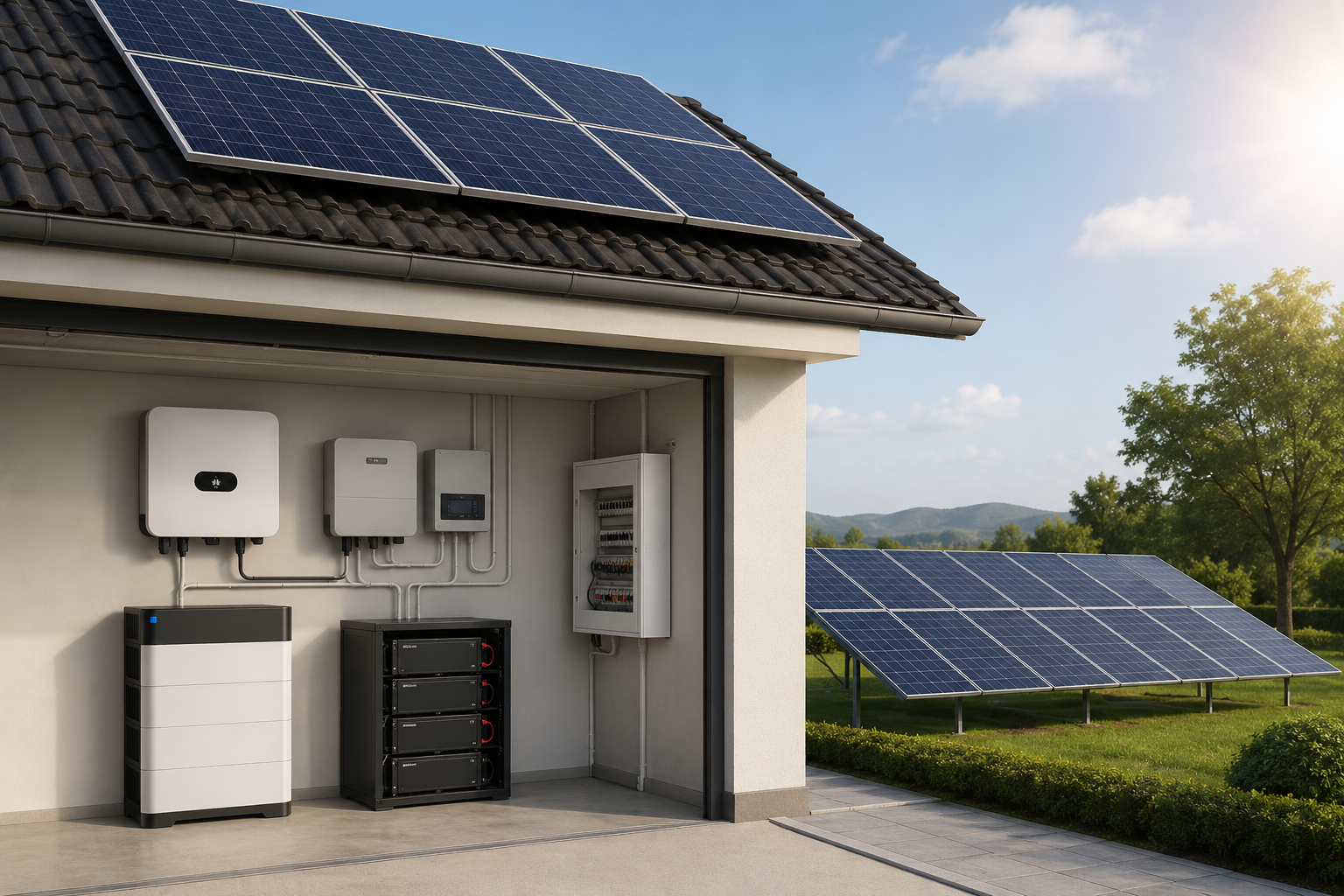
Checking battery storage, if installed
Troubleshooting faults and replacing damaged equipment
Maintenance involves more than cleaning solar panels. A comprehensive process should assess the mechanical components, electrical systems, and operating data together.
Dust, leaves, bird pings, and other contaminants can reduce the sunlight reaching photovoltaic cells. Prolonged shading or contamination may affect the output of individual panels or entire strings.
Proper cleaning and periodic inspections help panels receive sunlight more effectively and identify areas frequently affected by shading.
Some faults do not immediately shut down the system but gradually reduce energy production. Without monitoring, users may not notice abnormal operation in the inverter, solar strings, or electrical connections.
Regular inspections help identify issues such as:
Low output from solar strings
Cracked or discolored panels
Loose connectors
Deteriorated cables
Frequent inverter fault alerts
Abnormal protection device operation
Loose or corroded mounting structures
Battery storage imbalance
Solar panels can generate DC voltage whenever they are exposed to sunlight. Loose connectors, damaged cables, or unsuitable protection devices can therefore create electrical hazards.
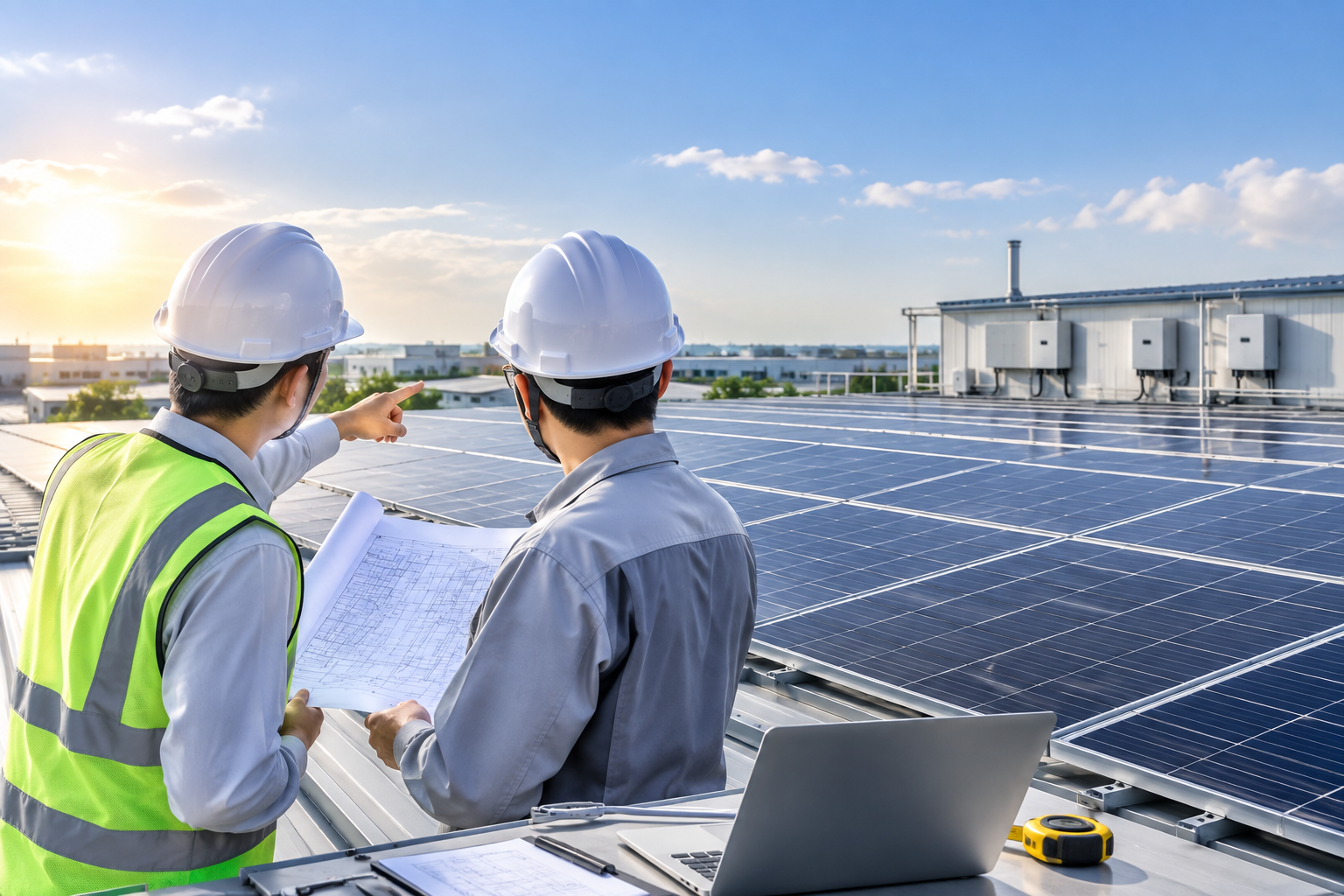
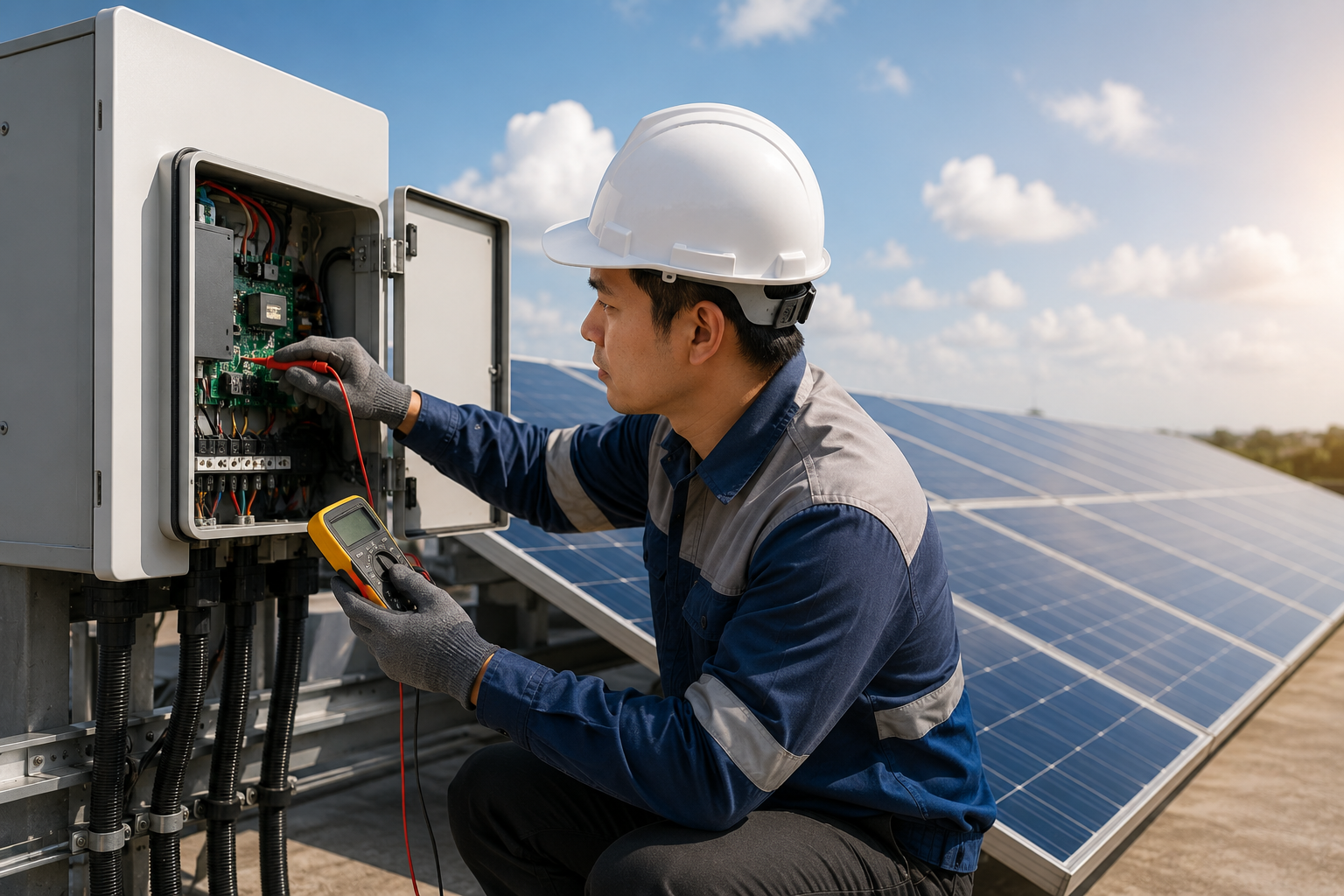
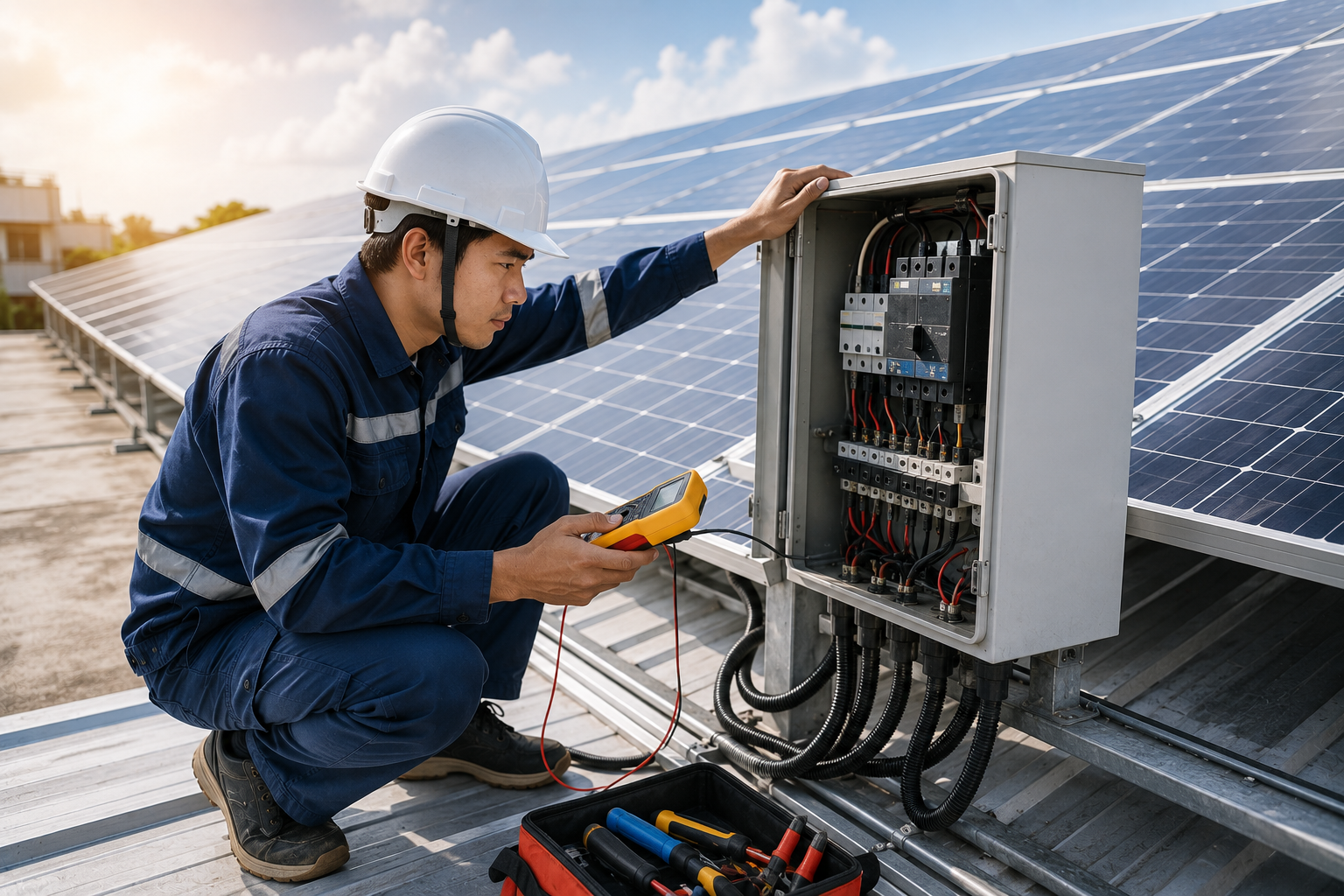
Inspections should be performed by qualified technicians using appropriate measuring instruments and protective equipment. Users should not open inverters, electrical panels, or handle DC wiring without proper training.
Solar panels can operate for many years, but components such as inverters, cooling fans, connectors, cables, and switching devices may deteriorate sooner depending on operating conditions.
Maintenance helps equipment operate under appropriate conditions, reduces overheating, and minimizes the risk of damage spreading to other components.
The system should be inspected according to a schedule recommended by the system designer, installer, or equipment manufacturer. The appropriate frequency depends on system size, location, and environmental conditions.
The following schedule can serve as a general reference:
| Maintenance Item | Recommended Frequency |
| Monitor energy production and alerts | Daily or weekly through monitoring software |
| Visually inspect panels and inverter | Monthly |
| Clean solar panels | According to actual dirt accumulation |
| Comprehensive technical inspection | Approximately every 6-12 months |
| Inspection after severe weather | As soon as conditions are safe |
| Battery storage inspection | According to manufacturer instructions |
These intervals are general guidelines. Factories with heavy dust, coastal installations, and facilities exposed to corrosive environments may require more frequent inspections.
Energy production varies with seasons, weather, and sunlight hours. However, if output decreases significantly compared with previous periods under similar operating conditions, the system should be inspected.
Possible causes include:
Dirty solar panel surfaces
New shading obstacles
Disconnected solar strings
Faulty panels or bypass diodes
Poor electrical connections
Inverter power limitations
Unstable grid conditions
Incorrect data recorded by the monitoring system
Technicians should compare actual production with historical data, weather conditions, and individual string parameters before determining the cause.
The inverter is the central device for power conversion and system monitoring. An inspection is necessary if the inverter:
Displays repeated fault alerts
Frequently shuts down and restarts
Cannot connect to the monitoring application
Fails to receive power from one or more solar strings
Cannot synchronize with the utility grid
Produces unusual noises
Reaches excessively high temperatures
Displays zero output despite sunny conditions
Fails to charge or discharge the battery
Simply clearing fault codes or repeatedly restarting the device is not sufficient. The underlying cause must be identified, whether it relates to the solar panels, grid, cables, battery storage, or inverter itself.
Heavy rain, strong winds, lightning, and flooding can affect solar panels, mounting structures, and electrical equipment. After severe weather, inspect the following:
Panels for displacement, cracks, or breakage
Mounting structures and bolts for looseness
Cables for stretching or displacement
Junction boxes for signs of water ingress
Electrical panels and inverters for moisture exposure
Lightning protection devices for damage
Roof surfaces for leaks or structural damage
Roof inspections should only be performed when weather conditions are safe and appropriate fall-prevention measures are in place.
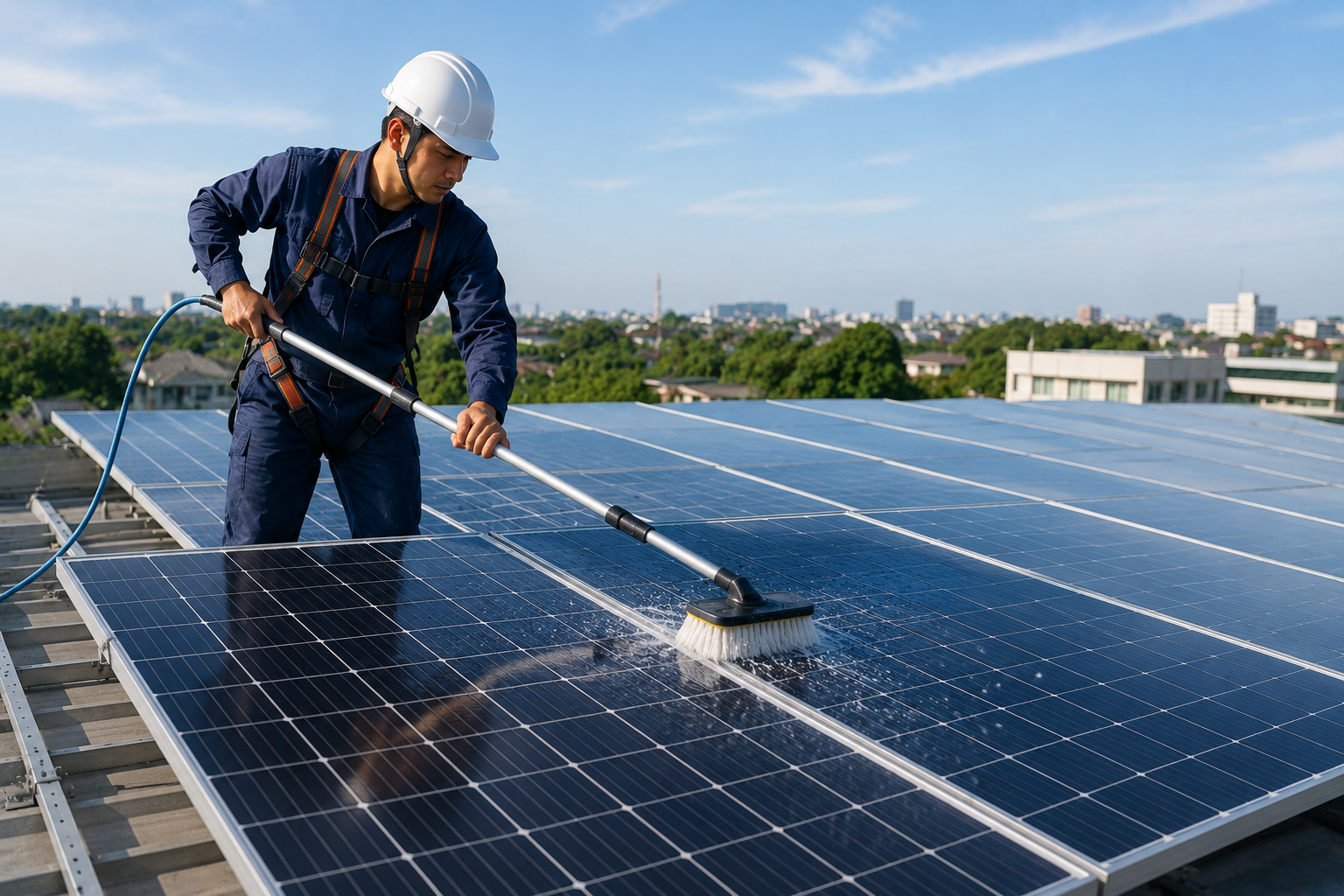
There is no single cleaning schedule suitable for every solar installation. Cleaning frequency depends on rainfall, dust levels, panel tilt, and surrounding environmental conditions.
Cleaning may be necessary when the panels show:
Thick dust accumulation
Bird pings or leaf coverage
Mud deposits along panel edges
Persistent industrial dust contamination
Reduced output consistent with surface contamination
Avoid sharp tools, unsuitable chemicals, or spraying cold water onto excessively hot panels. Cleaning procedures should follow manufacturer instructions to prevent glass scratches and potential warranty issues.
Growing trees, new buildings, or equipment installed on rooftops may create shading that was not present during the initial installation. Shading can reduce the output of affected panels and may also affect the performance of an entire string.
An inspection is recommended when:
Output s during a specific time of day
New trees or obstacles appear
A section of panels becomes unusually hot
One string produces less current than others
The inverter records significant differences between MPPT inputs
Technicians can reassess shading conditions and recommend tree trimming, string reconfiguration, or panel repositioning where appropriate.
Mounting structures must support the weight of solar panels and withstand wind and rain over extended periods. Maintenance is necessary when any of the following signs appear:
Loose bolts
Bent or misaligned mounting structures
Corroded connection points
Panels vibrating in strong winds
Corrosion on metal roofing
Water leaks around mounting points
Cables sagging or rubbing against metal edges
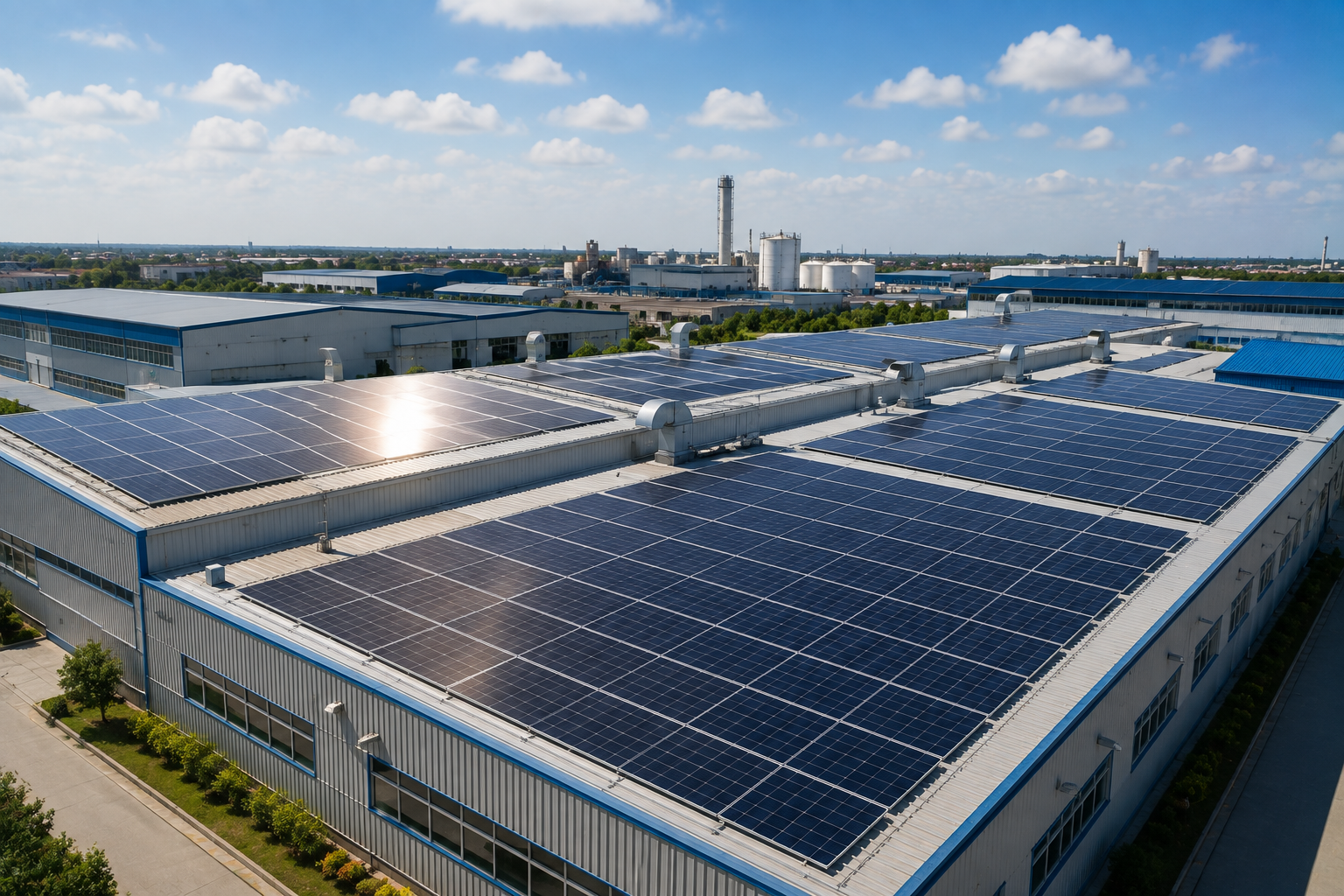
For industrial rooftop systems, structural inspections should be coordinated with roof maintenance schedules to minimize disruption to production activities.
DC cables are often installed outdoors and may be exposed to UV radiation, temperature changes, and humidity. Inspect the system if you notice:
Cracked or deformed cable insulation
Animal damage to cables
Discolored connectors
Signs of overheating at connection points
Cables touching the roof or sharp edges
Damaged cable clips
Solar strings that frequently lose connection
Connectors should not be disconnected or reconnected arbitrarily while the system is generating power. All work must follow the appropriate electrical isolation procedures.
Customers should arrange a comprehensive inspection before the product warranty expires. This helps identify potential defects that may qualify for repair or replacement by the manufacturer or supplier.
Records to retain include:
Contracts and handover documents
Warranty certificates
Equipment serial numbers
Energy production data
Photographs of equipment conditions
Fault history
Inspection and repair reports
Equipment replacement records
Complete documentation makes warranty verification and claims processing easier.
The entire system configuration should be reviewed before:
Adding solar panels
Replacing the inverter
Installing additional battery storage
Changing electricity loads
Adding high-power machinery
Converting from a grid-tied system to a hybrid system
Modifying electrical connections
New equipment must be compatible in terms of power ratings, voltage, current, and communication protocols. Panels with different specifications should not be added to existing strings without proper engineering assessment.
Do not wait for the next scheduled maintenance visit if the system shows any of the following signs:
A significant unexplained in energy production
Repeated inverter fault alerts
Frequent automatic shutdowns
Burning smells or signs of overheating
Water ingress into electrical panels, inverters, or junction boxes
Exposed or damaged cables
Cracked, broken, or displaced panels
Loose mounting structures after storms
Frequent tripping of protection devices
Battery charging failures, swelling, or deformation
Prolonged loss of monitoring data
Unusual differences in output between solar strings
For issues involving electricity, excessive heat, or physical damage, restrict access to the affected area and contact a qualified technical service provider.
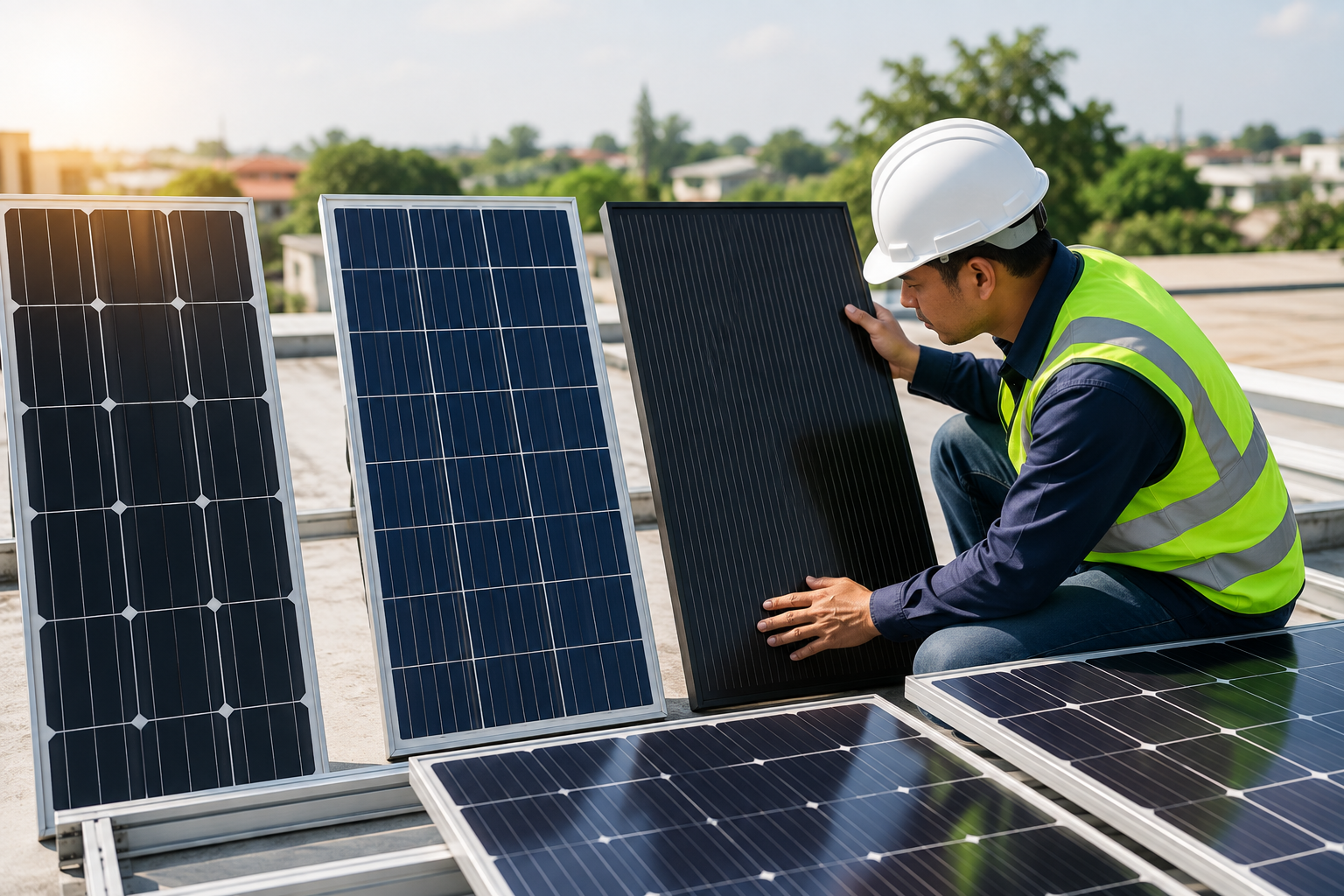
Technicians inspect glass surfaces, panel frames, clamps, and junction boxes. Panels showing cracks, discoloration, delamination, or localized hot spots require further assessment.
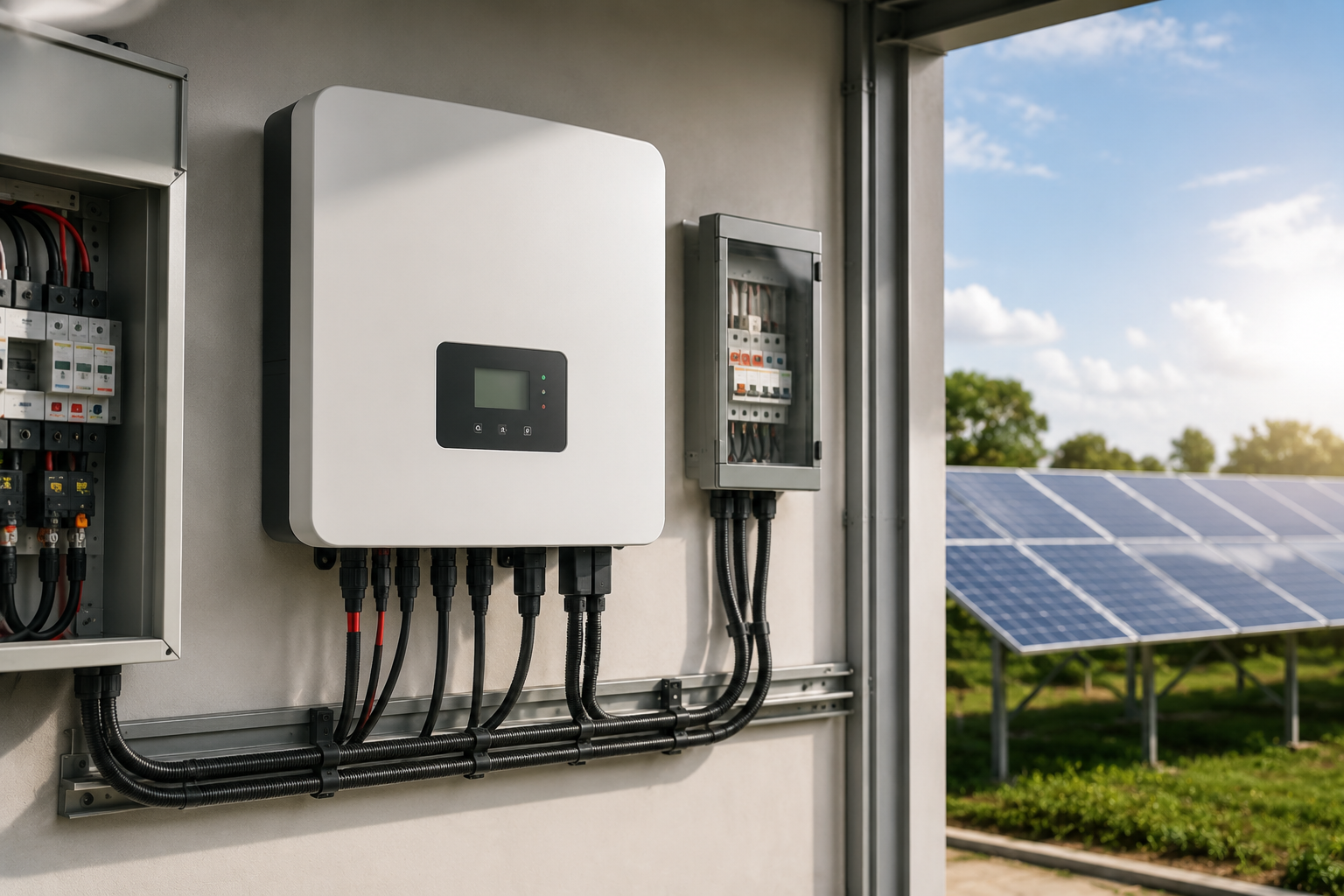
This includes reviewing fault history, checking operating temperatures, cooling vents, fans, DC input parameters, and AC output parameters. Software should only be updated according to official manufacturer instructions.
DC cables, AC cables, connectors, and electrical panel connections should be checked for insulation condition, secure fastening, and signs of overheating. Connection tightening must follow the manufacturer's specified torque requirements.
Switching devices, fuses, surge protection devices, grounding systems, and residual-current protection devices should be checked to ensure they remain suitable for the original system design.
Energy production data helps identify changes that may not be visible during a visual inspection. Output should be compared across days with similar conditions, between MPPT inputs, and between solar strings.
For hybrid systems, technicians should check the state of charge, temperature, BMS alerts, balance between battery modules, and communication with the inverter. Battery maintenance must follow the manufacturer's specific instructions.
A basic maintenance procedure typically includes:
Collect system information and operating history.
Review alerts on the monitoring platform.
Visually inspect solar panels, roofing, and mounting structures.
Isolate electrical sources according to safety procedures.
Inspect the inverter, electrical panels, and cables.
Measure solar string parameters.
Clean solar panels if necessary.
Repair or recommend replacement of abnormal components.
Test system operation and monitor energy production again.
Prepare a maintenance report and retain the records.
Inspection requirements may vary depending on whether the system is residential, commercial, industrial, or equipped with battery storage.
Users can monitor energy production through an application and visually inspect equipment from a safe location. However, they should not independently perform tasks involving:
Walking on elevated roofs
Removing solar panels
Opening inverters or electrical panels
Disconnecting DC connectors
Measuring solar string voltage
Replacing fuses or surge protection devices
Repairing battery storage
Modifying technical software settings
Solar panels can continue generating DC electricity during daylight even when the inverter has been switched off. Electrical inspections should therefore be handled by qualified technicians.
Customers should a service provider capable of:
Accurately assessing site conditions
Inspecting both electrical and mechanical components
Using appropriate measuring equipment
Reading and analyzing inverter data
Following rooftop work safety procedures
Providing maintenance reports
Identifying faults, causes, and corrective actions
Supplying compatible replacement equipment
Monitoring system performance after inspection
Avoiding unauthorized configuration changes
For factories and industrial projects, maintenance schedules should be coordinated with production hours to minimize operational disruption.
Solar power systems require scheduled maintenance and immediate inspection whenever electricity production s, the inverter displays faults, panels become excessively dirty, or equipment shows signs of abnormal operation. Systems should also be inspected after severe weather, before warranty expiration, and before any capacity expansion.
Proper maintenance helps maintain energy production, detect faults early, and ensure safe operation. Households, businesses, and project owners should establish monitoring schedules, retain energy production records, and choose qualified technical providers capable of conducting comprehensive system inspections.
CATEGORIES
What Are the Main Components of a Solar Energy Storage System?
Solar Power System Design And Installation Process
How To Choose The Right Solar Panels
What Is A Solar Inverter? Its Role In A Solar Power System
When Should A Solar Power System Be Maintained?
How To Clean Solar Panels Properly
Signs That Your Solar Power System Needs Inspection Or Repair
Featured Products & Services
*YOU MAY ALSO LIKE
Contact us at Hotline: 0983 428 916 for consultation on solar energy equipment, system design, installation, and maintenance services.
Address: No. 105 Hoang Van Thai Street, Phuong Liet Ward, Ha Noi, Vietnam
Hotline: +84 983428916
Email: info@lochoangan.com
Loc Hoang An Tech specializes in consulting, designing, supplying equipment, and installing solar power systems for businesses, factories, industrial parks, commercial buildings, households, and civil construction projects nationwide.
LOC HOANG AN TECHNOLOGY GROUP JOINT STOCK COMPANY
Address: No. 105 Hoang Van Thai Street, Phuong Liet Ward, Ha Noi, Vietnam
Hotline: +84 983428916
Email: info@lochoangan.com
LOC HOANG AN TECHNOLOGY GROUP JOINT STOCK COMPANY
Địa chỉ: No. 105 Hoang Van Thai Street, Phuong Liet Ward, Ha Noi, Vietnam
Business Registration Certificate No. 0109587058 – Issued by the Department of Planning and Investment of Hanoi on April 07, 2021
Person responsible for content: Mr. Hien
@ Copyright by LOC HOANG AN TECHNOLOGY GROUP JOINT STOCK COMPANY. Designed by Vietnam Yellow Pages.