Hotline: +84 981638588
Email: info@lochoangan.com No. 105 Hoang Van Thai Street, Phuong Liet Ward, Ha Noi, Vietnam
WHAT ARE THE MAIN COMPONENTS OF A SOLAR ENERGY STORAGE SYSTEM?
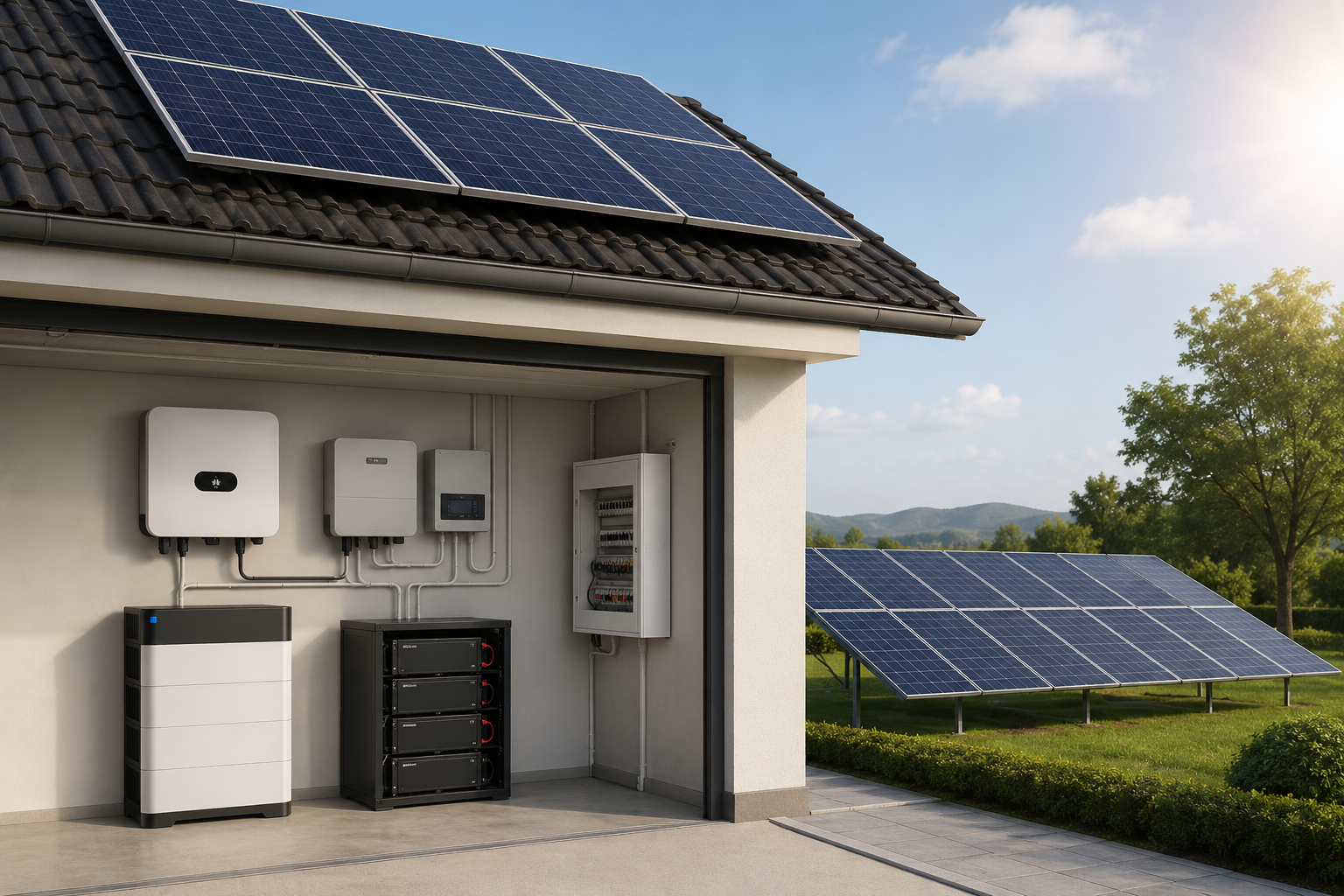
A solar energy storage system does more than generate electricity from sunlight. It also stores excess energy for use at night, during power outages, or when the grid supply is unstable. To operate efficiently, the system requires several interconnected components, including solar panels, an inverter, battery storage, electrical panels, and a monitoring system.
A solar energy storage system combines solar panels with a battery storage unit. Electricity generated by the panels is prioritized for powering operating equipment and appliances. Any surplus electricity can be stored in the battery for use when sunlight is unavailable.
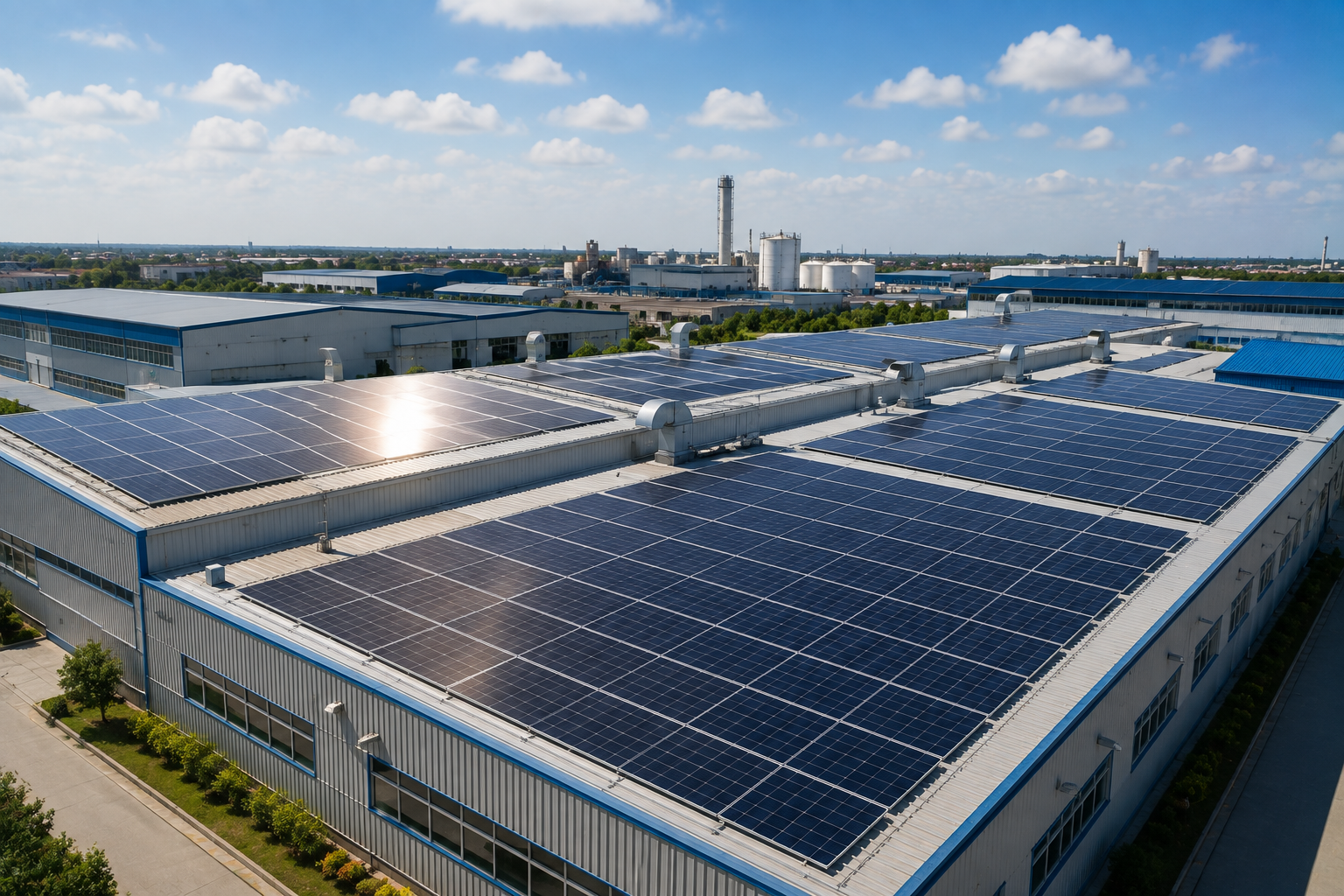
Depending on the system design, it can also connect to the utility grid or a generator to maintain a continuous power supply. This solution is suitable for households, offices, factories, commercial facilities, and areas experiencing frequent power outages.
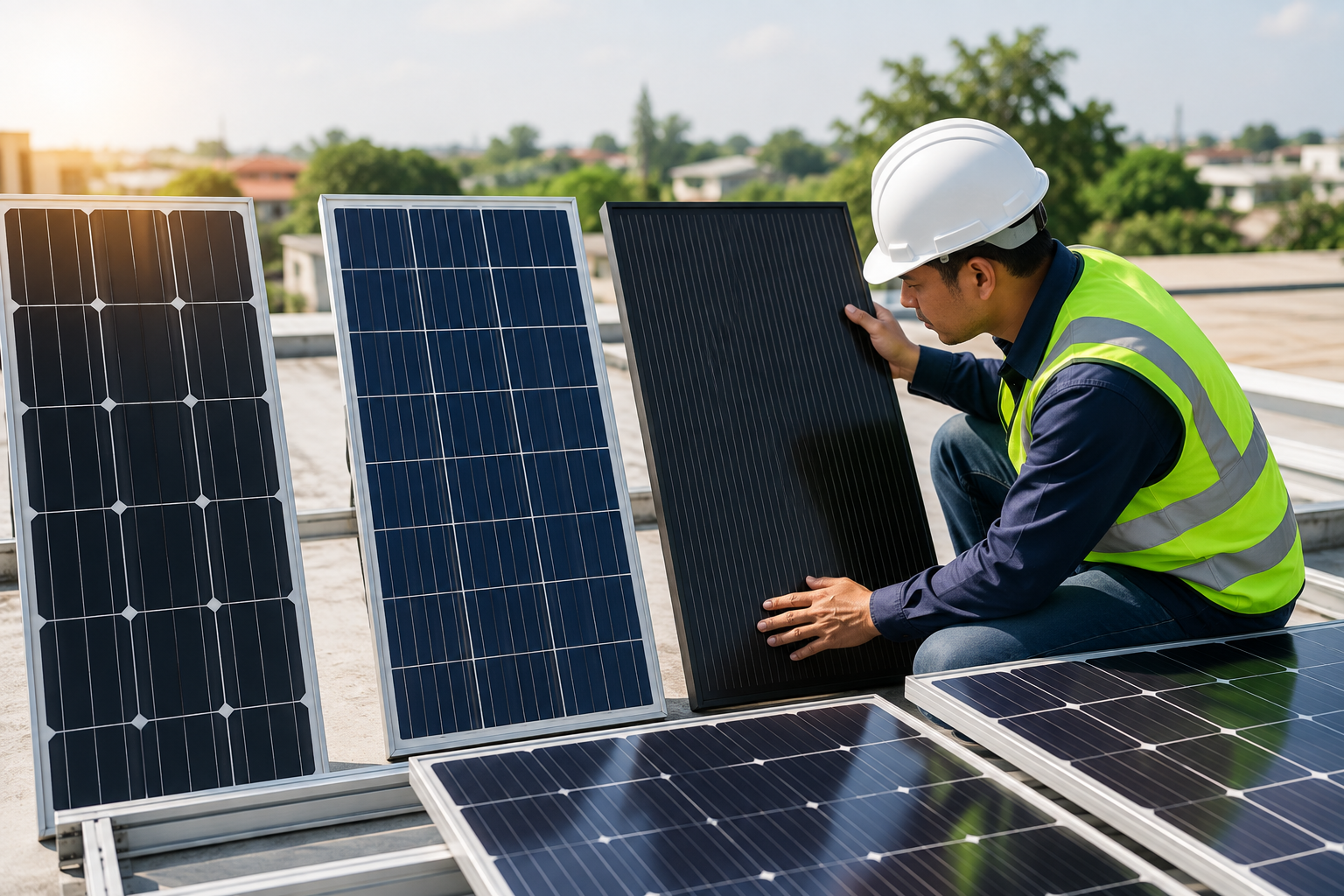
Solar panels absorb solar radiation and convert it into direct current (DC) electricity. They are the primary components responsible for generating electricity for the entire system.
The capacity and number of panels should be determined based on:
Daily electricity consumption
Available roof installation area
Roof orientation and tilt angle
Local sunlight availability
Future system expansion requirements
High-efficiency panels with low degradation rates help maintain stable electricity generation over the long term.
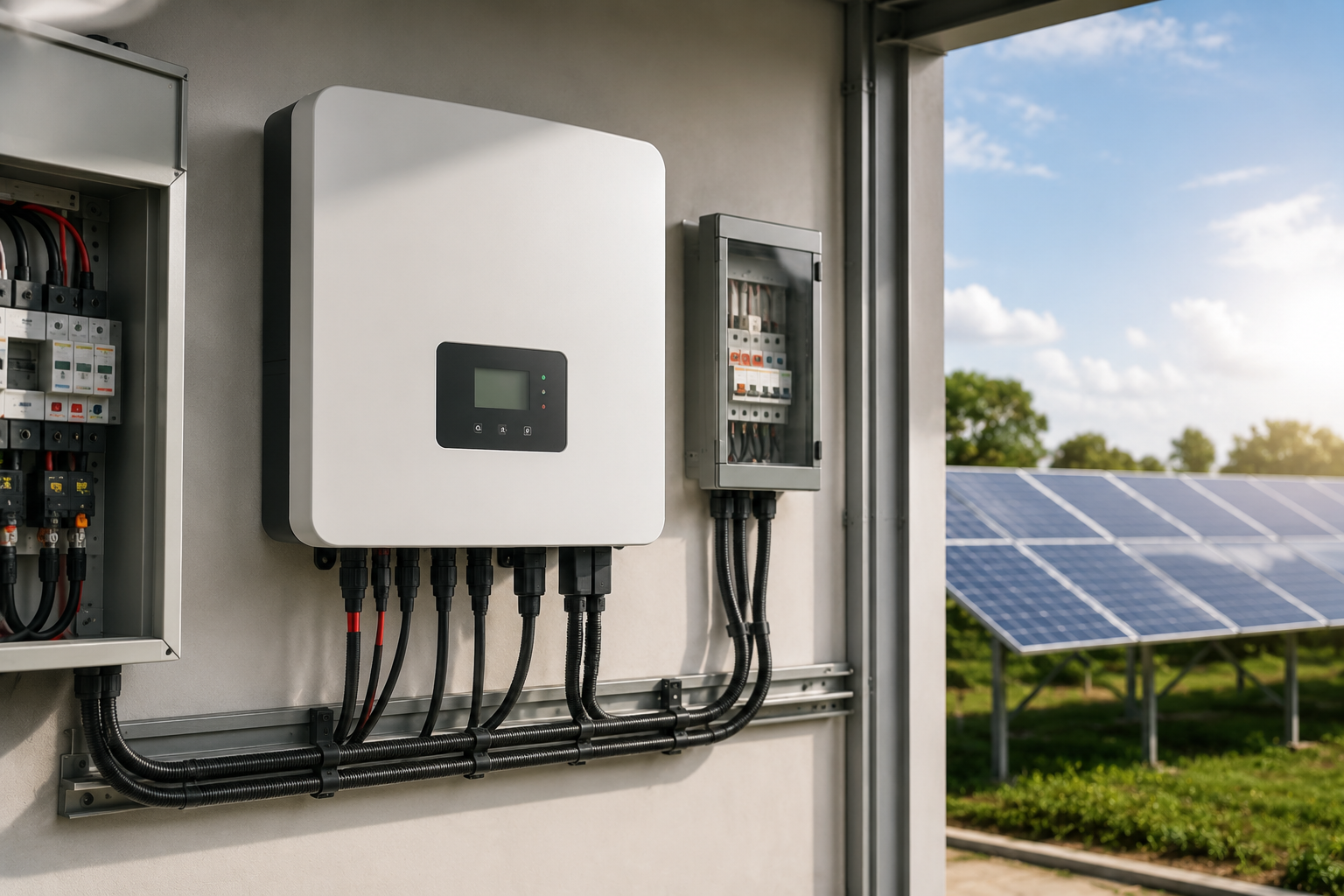
A hybrid inverter is the central control unit of a solar energy storage system. It converts DC electricity from solar panels and batteries into alternating current (AC) electricity suitable for electrical appliances and equipment.
The inverter also performs several important functions, including:
Managing power flows between solar panels, batteries, and the utility grid
Controlling battery charging and discharging
Switching power sources when grid failures occur
Monitoring system operating conditions
Protecting equipment against overloads and abnormal conditions
The inverter capacity must match the total power requirements of the connected equipment, particularly the priority loads that need to remain operational during power outages.
Battery storage captures surplus electricity generated by solar panels and supplies it when needed. This is the key component that distinguishes a storage system from a conventional grid-tied solar power system without batteries.
Lithium batteries are widely used because of their high energy density, fast charging capability, relatively long cycle life, and compact size compared with many traditional lead-acid batteries.
When ing a battery storage system, consider the following factors:
Storage capacity
Charging and discharging power
Permitted depth of discharge (DoD)
Cycle life
Battery voltage
Compatibility with the inverter
Warranty policy
Battery capacity should be calculated according to the amount of electricity required at night or during the expected backup period.
The Battery Management System (BMS) monitors and protects the battery storage unit. It tracks voltage, current, temperature, and the operating status of individual battery modules.
The BMS helps prevent overcharging, excessive discharge, overcurrent, overheating, and imbalances between battery cells. Some battery units have an integrated BMS that communicates directly with the inverter.
Reliable communication between the BMS and inverter is essential for system performance and operational safety.
The mounting structure secures solar panels to metal roofs, tiled roofs, concrete roofs, or ground-mounted installations. It must provide sufficient load-bearing capacity, vibration resistance, corrosion protection, and durability under local weather conditions.
Proper mounting design helps to:
Position panels for optimal sunlight exposure
Minimize shading between panel rows
Provide adequate ventilation for heat dissipation
Secure panels against strong winds
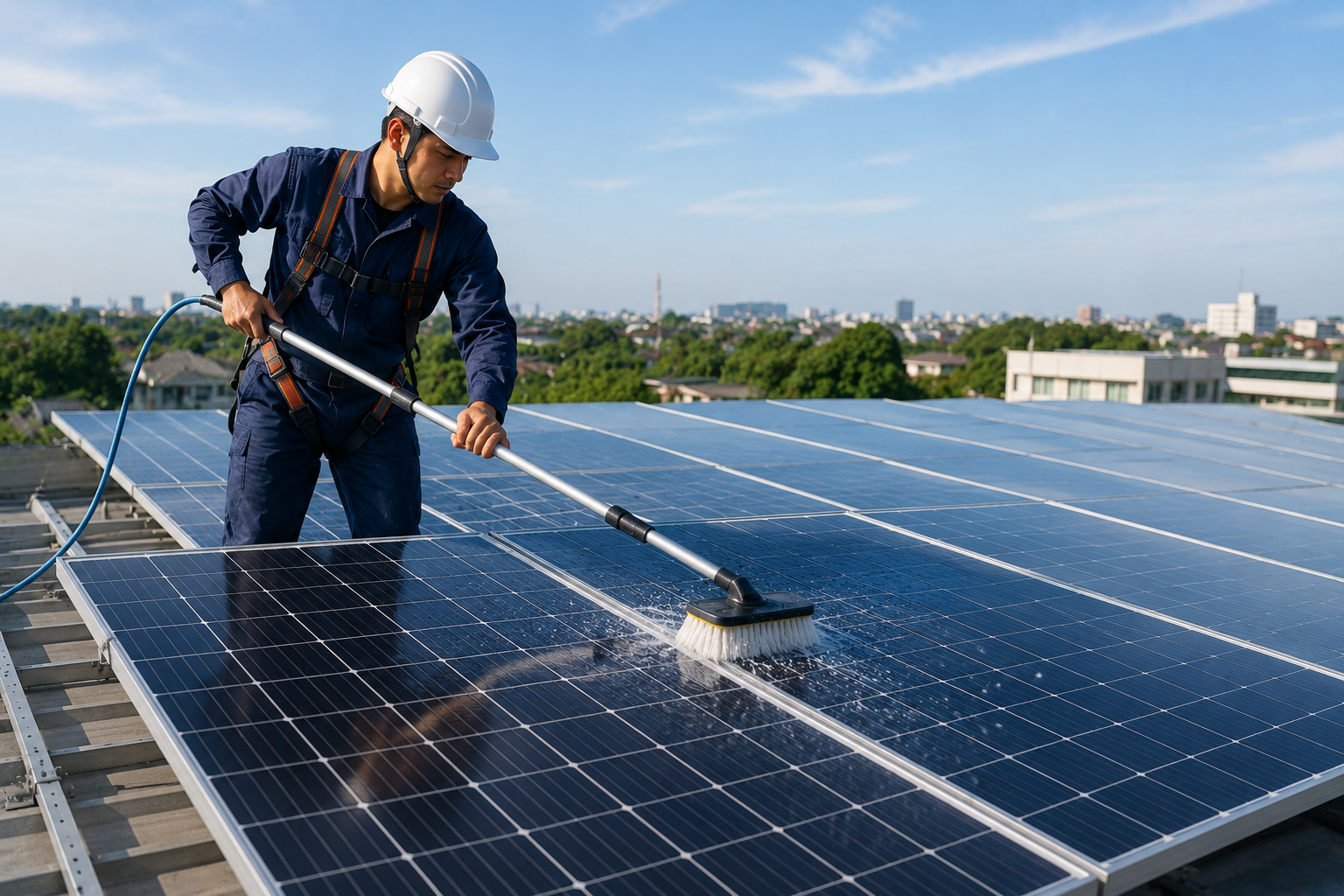
Facilitate inspection and cleaning
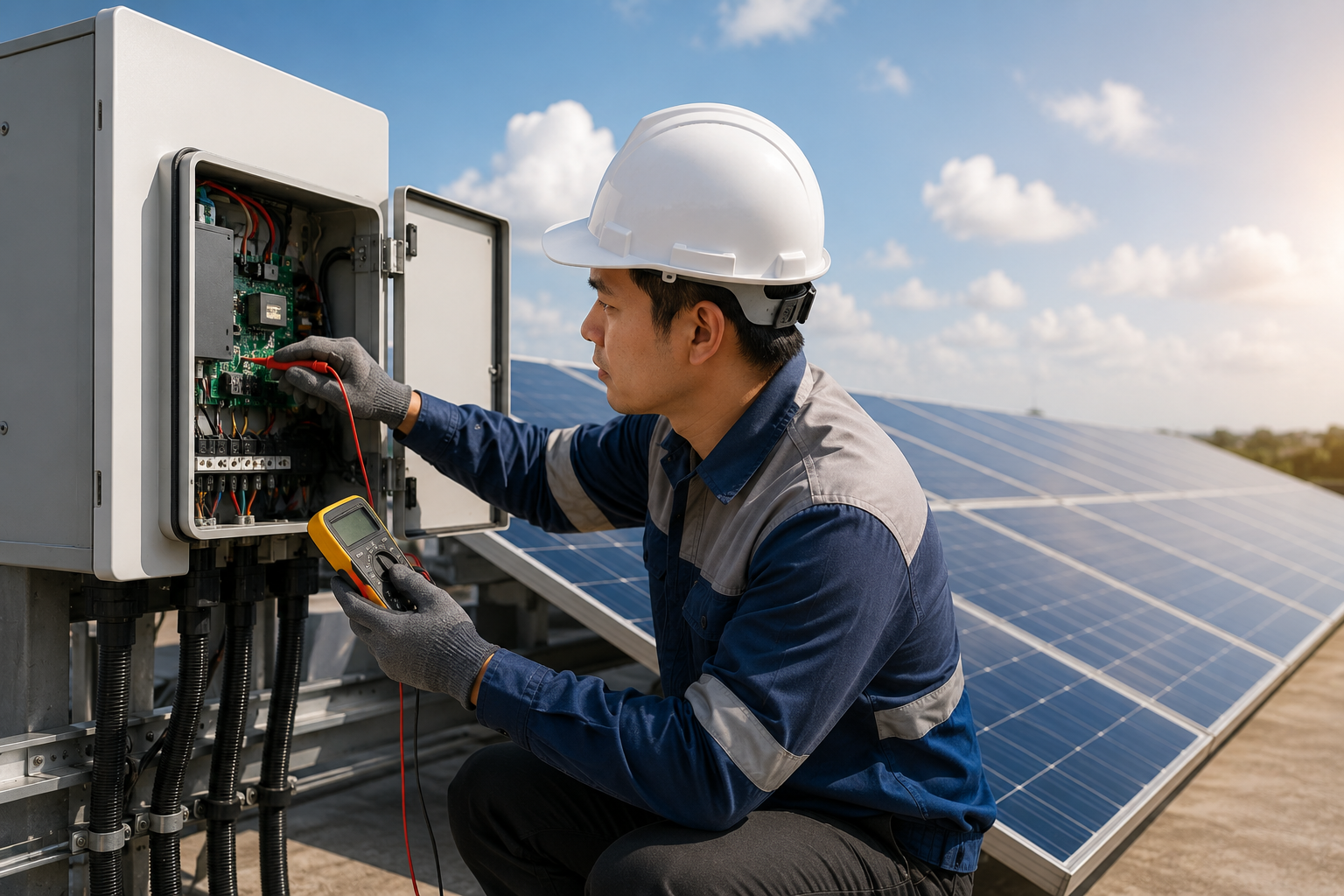
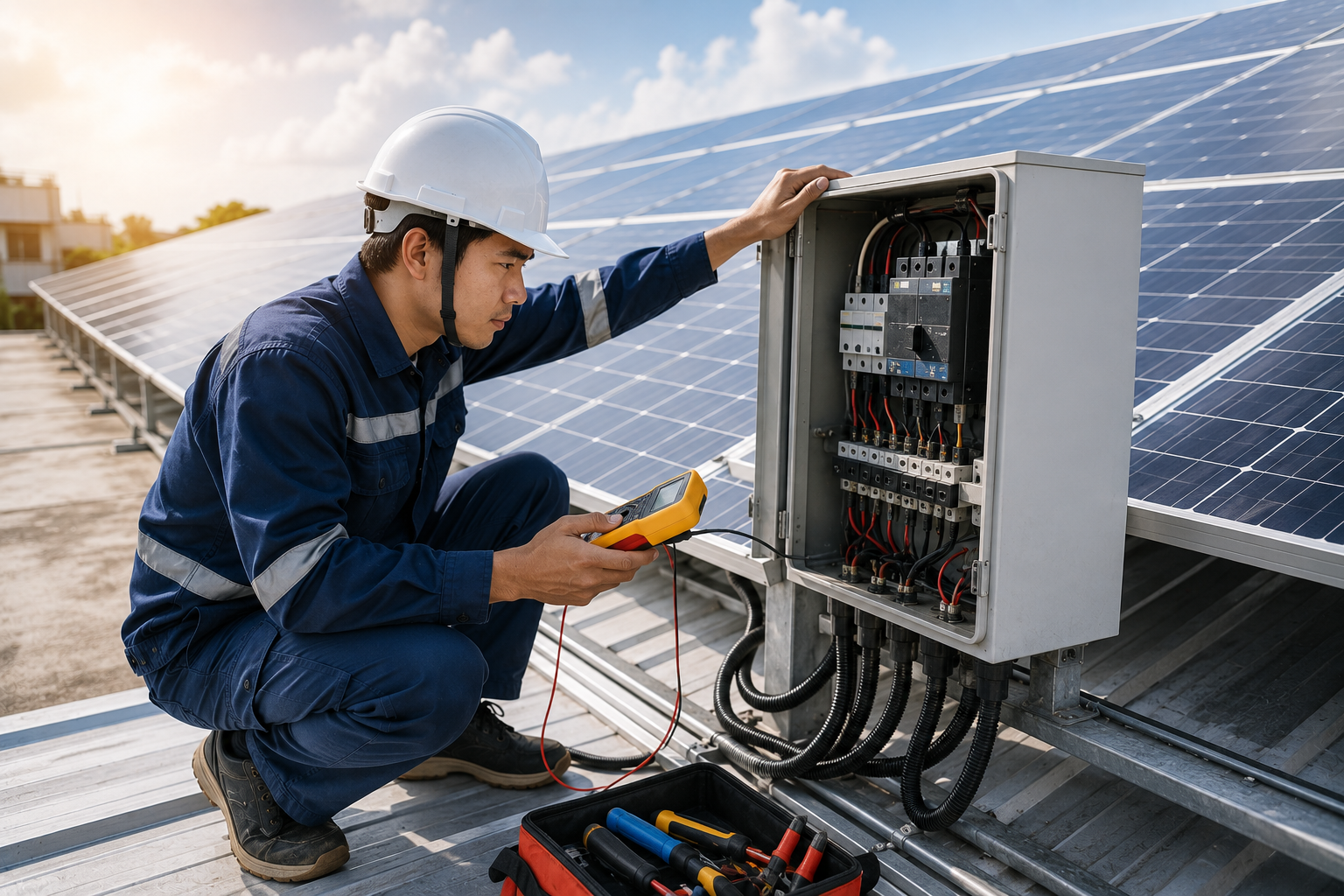
Electrical panels house the switching, protection, and power distribution equipment used throughout the system. Depending on the project size, the installation may include DC panels, AC panels, and dedicated critical-load panels.
Common protection devices include:
DC and AC circuit breakers
Protective fuses
Surge protection devices (SPDs)
Isolation switches
Connection terminals and busbars
Grounding systems
These devices disconnect power during overcurrent, short circuits, or electrical faults, helping protect the inverter, batteries, and connected equipment.
Solar power systems require DC cables, AC cables, and connectors suitable for the operating voltage, current, and installation environment.
Cables used on the solar panel side must withstand high temperatures, ultraviolet (UV) radiation, and outdoor conditions. Cable cross-sections must be properly calculated to minimize energy losses and prevent excessive heating during operation.
Connectors must be securely installed, correctly polarized, and appropriately waterproofed. Poor connections can reduce system efficiency and create safety hazards.
A smart energy meter measures electricity generated by the system, energy consumed by connected loads, electricity imported from the grid, and battery charging or discharging.
Meter data helps the inverter manage power flows according to the configured operating mode. In certain systems, the meter also helps control electricity exported to the grid.
A monitoring system allows users to track system performance through a smartphone or computer. Data may be displayed in real time or recorded daily, monthly, and annually.
Users can monitor:
Solar power generation
Electricity consumption
Remaining battery capacity
Battery charging and discharging power
Electricity imported from the grid
Equipment fault alerts
Monitoring helps identify abnormal conditions early and enables technicians to inspect and maintain the system more efficiently.
When the utility grid fails, not every system needs to supply power to all connected equipment. A critical-load panel separates essential loads, such as lighting, computers, security cameras, network equipment, refrigerators, and essential production machinery.
A transfer switch enables the system to switch to backup power according to its configuration. Identifying priority loads correctly helps reduce battery investment costs and extend backup operating time during grid outages.
During the day, solar panels generate electricity to power operating equipment directly. When generation exceeds consumption, the surplus electricity charges the battery.
When solar generation decreases, the inverter draws electricity from the battery to supply connected loads. If the battery no longer has sufficient energy, the system can switch to grid electricity or a generator, depending on its configuration.
During a grid outage, the hybrid inverter supplies electricity to priority loads using power from the solar panels and battery storage. Switching capability and backup duration depend on inverter capacity, battery storage capacity, and actual electricity demand.
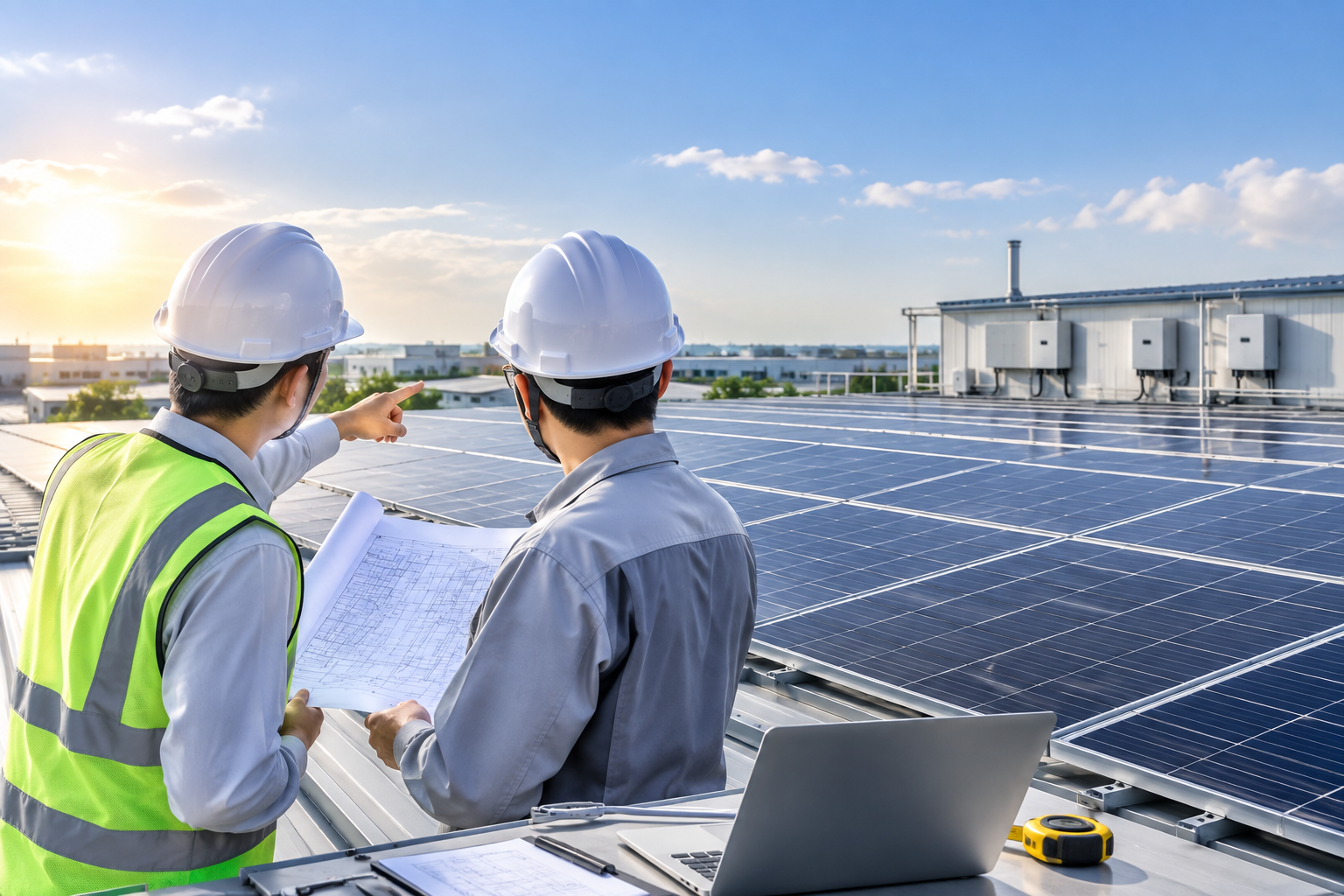
Choosing the right configuration requires more than looking at total monthly electricity consumption. The system designer should assess the load profile, equipment power requirements, usage schedules, and investment objectives.
Key factors to consider include:
Nighttime electricity storage requirements
Power demand that must be maintained during outages
Desired backup duration
Roof area and structural conditions
Potential for future battery or solar panel expansion
Compatibility between the inverter and battery
Equipment warranty and maintenance conditions
System monitoring and fault response capabilities
An undersized system may fail to meet electricity requirements. Conversely, a system that is significantly larger than the actual load may increase investment costs and extend the payback period.
A complete solar energy storage system consists of solar panels, a hybrid inverter, battery storage, a BMS, mounting structures, electrical panels, cables, an energy meter, and monitoring equipment. Each component performs a specific function, but all components must be compatible and properly integrated.
A thorough load assessment and appropriate system design from the outset help ensure stable operation, efficient use of solar energy, and reliable backup power. Businesses and households should choose a qualified provider capable of delivering consultation, equipment supply, installation, and technical support throughout the system's service life.
CATEGORIES
What Are the Main Components of a Solar Energy Storage System?
Solar Power System Design And Installation Process
How To Choose The Right Solar Panels
What Is A Solar Inverter? Its Role In A Solar Power System
When Should A Solar Power System Be Maintained?
How To Clean Solar Panels Properly
Signs That Your Solar Power System Needs Inspection Or Repair
Featured Products & Services
*YOU MAY ALSO LIKE
Contact us at Hotline: 0983 428 916 for consultation on solar energy equipment, system design, installation, and maintenance services.
Address: No. 105 Hoang Van Thai Street, Phuong Liet Ward, Ha Noi, Vietnam
Hotline: +84 983428916
Email: info@lochoangan.com
Loc Hoang An Tech specializes in consulting, designing, supplying equipment, and installing solar power systems for businesses, factories, industrial parks, commercial buildings, households, and civil construction projects nationwide.
LOC HOANG AN TECHNOLOGY GROUP JOINT STOCK COMPANY
Address: No. 105 Hoang Van Thai Street, Phuong Liet Ward, Ha Noi, Vietnam
Hotline: +84 983428916
Email: info@lochoangan.com
LOC HOANG AN TECHNOLOGY GROUP JOINT STOCK COMPANY
Địa chỉ: No. 105 Hoang Van Thai Street, Phuong Liet Ward, Ha Noi, Vietnam
Business Registration Certificate No. 0109587058 – Issued by the Department of Planning and Investment of Hanoi on April 07, 2021
Person responsible for content: Mr. Hien
@ Copyright by LOC HOANG AN TECHNOLOGY GROUP JOINT STOCK COMPANY. Designed by Vietnam Yellow Pages.